

If you’re struggling with your mental health and need more support than weekly outpatient visits with a therapist, partial hospitalization programs (PHP) or intensive outpatient programs (IOP) can be helpful options.
Rogers Behavioral Health’s Heather Steiner, LMHC, senior director of operations, continues our series, A Day in the Life at Rogers: Exploring Each Level of Care, explaining what PHP and IOP care are and how the more intensive support can make a difference.
What are PHP and IOP levels of care?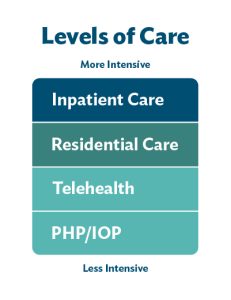
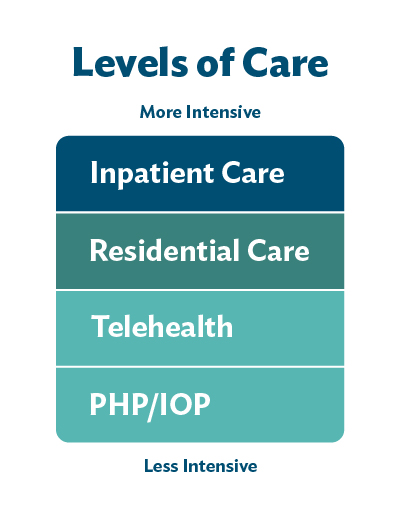
PHP and IOP are for those who need structured mental and behavioral health care but don’t require 24-hour support through an inpatient or residential setting.
We believe in being flexible and meeting you where you are, both in the level of care you need and by helping remove barriers to treatment. We understand the commitment higher levels of care require. We offer different programs and work with each person to find a schedule that supports treatment while still allowing balance in daily life.
Partial hospitalization programs, or PHP: Treatment lasts for four to eight weeks, Monday through Friday for approximately 6.5 hours per day.
Intensive outpatient programs, or IOP: Treatment lasts four to eight weeks for approximately three hours per day time to attend school or work before or after treatment.
After completing PHP or IOP, our outpatient treatment programs provide continued support.

How do patients balance PHP and IOP with daily responsibilities?
Balancing daily responsibilities looks different for children and adults.
For children:
We work closely with parents and their child’s school to figure out what works best while they’re receiving care. This may include options like Hospital Homebound, virtual school, or coordinating with the school so the child can stay on track with assignments while receiving treatment. Most Rogers’ locations offer convenient after-school IOPs.
For adults:
We offer a variety of options, including late afternoon and evening program times at many of our locations, which can be helpful if you’re still working while attending treatment. If symptoms prevent you from continuing to work, our team will work with your employer to assist with FMLA to take time to focus on your mental health.
Virtual offerings:
Our telehealth treatment programs allow you to receive care from the comfort of your own home, especially when distance makes in-person treatment difficult. These programs help more people access care who might not have been able to attend treatment otherwise.
What does a typical morning look like in treatment?
You start your day by checking in with your therapist or other member of your care team. It’s a chance to share how you’re feeling, talk about how your previous evening went (including completing any therapeutic assignments), and determine what you’ll focus on for the treatment day.
What types of therapy are part of care?
I always describe our treatment as a very active process. You’ll take part in different types of therapy, including group therapy, individual therapy, and family sessions. You may also meet with a medical provider if medication support is needed.
We work closely with you to teach, support, and give you the time and space to practice what you’re learning with your treatment team.
Are there tools or homework assignments that support progress?
Yes, completing therapeutic homework assignments is an important part of your treatment journey. Homework is assigned to specifically target the environments or places that can be triggering, giving you the opportunity to use the skills you’re learning or challenge former ways of thinking that may be contributing to your symptoms.
You’ll meet with your therapist daily to review progress on the previous day’s treatment assignments and will adjust as needed. We make changes to your treatment plan in real-time to better support your progress.
How does the care team help patients manage stress, triggers, or setbacks during the day?
As you begin your treatment journey with us, we provide psychoeducation in both individual sessions and group therapy to help you better understand your symptoms and care. By taking the time to understand your goals, we create individualized treatment plans to target your symptoms and help you develop skills to more effectively manage them.
What advice do you have for someone navigating PHP or IOP treatment?
There are many different choices for care. It’s important to be honest with yourself about the severity of your symptoms and how they’re impacting your everyday life. Take the time to review your options and find a program that offers a targeted approach and specializes in what you’re struggling with. Finding the right treatment is essential to improving your quality of life, relationships with family members and friends, and helping you function at your best at school or work. If you feel like you need help, don’t be embarrassed to seek care. Be an advocate for yourself by asking questions, taking tours, and making sure that you feel comfortable in the setting you’ve chosen.
What are common misconceptions about PHP and IOP care?
One of the most common misconceptions is that people don’t need mental health services or should be able to manage their symptoms on their own. While we’re making progress in reducing stigma, there’s still work to do in overcoming feelings of shame or embarrassment around seeking care.
Another misconception is that all therapists or programs are the same. It’s important to feel comfortable and confident in the person you’re working with. There are a variety of treatment approaches, and each clinician has their own style. If you don’t feel like the first one you picked is working, it’s okay to look at other programs or providers. This is about finding the right fit for you. Treatment isn’t easy, and recovery takes time.
Next in our series, we explore Rogers’ telehealth treatment and the benefits of virtual mental health care.