
Can social media affect recovery from an eating disorder?
The more we hear or see an idea, the more we tend to accept it as truth. Social media messages about body size and eating,
The more we hear or see an idea, the more we tend to accept it as truth. Social media messages about body size and eating,
Eating disorders are frequently just one sign of deeper emotional struggles. Rogers Behavioral Health’s Dr. Carolyn Turcott, MD, psychiatrist, medical director, Eating Disorder Recovery inpatient and residential care for adults, explains why co-occurring mental health
Athletes face unique challenges that can affect their relationship with food and their bodies. Rogers Behavioral Health’s Laina Nelson, M.A., M.S., doctoral psychology intern, Eating
Subtle changes in eating habits can sometimes be a cause for concern. Rogers Behavioral Health’s Dr. Jody Langford, MD, medical director, Eating Disorder Recovery Center

Telehealth is changing how you can access mental health care, from the safety and comfort of your home. Rogers Behavioral Health’s Stephanie Camacho, LPC, executive
If you’re struggling with your mental health and need more support than weekly outpatient visits with a therapist, partial hospitalization programs (PHP) or intensive outpatient
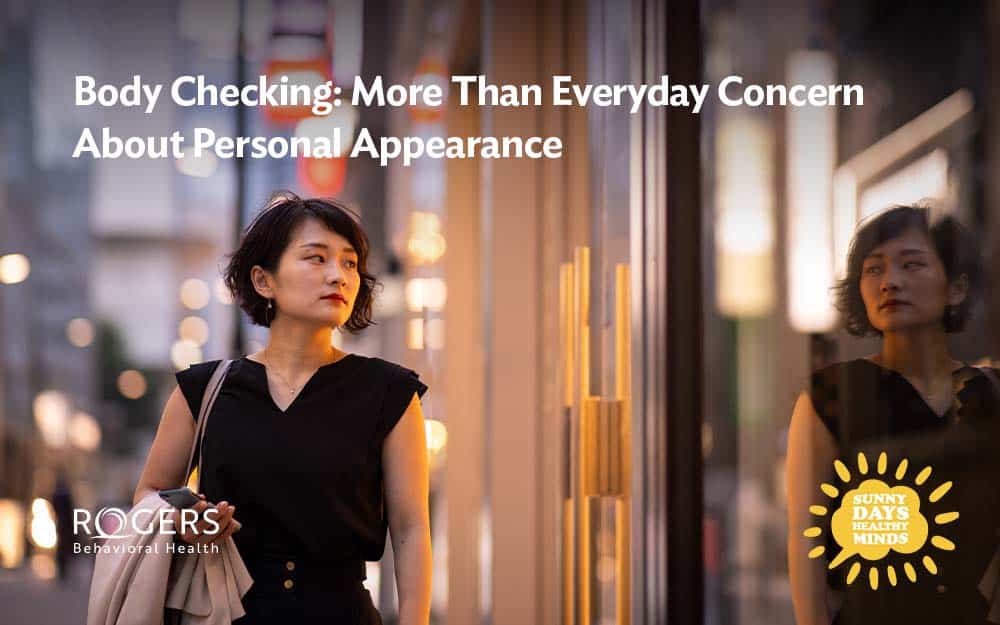
While everyone cares about their appearance, body checking goes beyond typical self-awareness. It can become a repetitive behavior linked to anxiety, body image concerns, and eating disorders.
When mental health symptoms become overwhelming or difficult to manage at home, more intensive mental health support is needed. Melissa Stoffel, MS, LPC, ICS, director
Taking the step into residential mental health treatment can feel like a lot to carry. It’s okay to feel unsure about being away from loved
Many people focus on exercising as part of a healthy lifestyle. But for some, concerns about muscle building can become overwhelming, affecting their mental health.
