

Telehealth is changing how you can access mental health care, from the safety and comfort of your home.
Rogers Behavioral Health’s Stephanie Camacho, LPC, executive director, Telehealth Services, concludes our series, A Day in the Life at Rogers: Exploring Each Level of Care. She shares what to expect in virtual treatment and explains how it overcomes common barriers to receiving care.
What is Rogers’ telehealth treatment? 
Our goal is to meet people where they are. Simply put, telehealth is another way we provide mental health treatment for children, teens, and adults in a format that fits your needs. You get the same effective care you would receive onsite.
What makes Rogers’ telehealth treatment unique is our HIPAA-compliant technology. We can easily move you within our virtual space throughout the day. For example, you might go from group therapy to one-on-one with your medical provider, and then back to group. It’s no different than being in a Teams or Zoom meeting.

You can access all the resources you need virtually, such as handouts and your treatment workbook. There’s no need for a printer or ink.
What are telehealth benefits?
The biggest benefit of telehealth therapy is that it removes barriers that prevent people from seeking care.
Maybe you live far from a Rogers’ clinic, feel too anxious to leave home, or are struggling with severe depression that makes it difficult to shower, let alone drive to treatment.
Telehealth makes treatment accessible from wherever you are.
What do we treat through telehealth?
We can help you overcome your mental health challenge, including common conditions, such as:
- Depression
- Obsessive-compulsive disorder (OCD)
- Anxiety disorders
- Eating disorders
- Mental health and addiction
- PTSD/Trauma
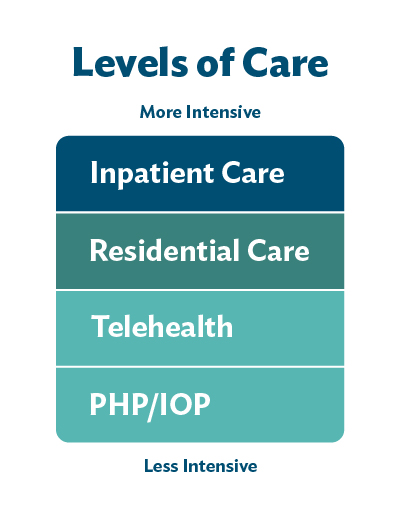
We offer virtual treatment in two levels of care: intensive outpatient programs (IOP) and partial hospitalization programs (PHP). Additionally, our outpatient services provide both in-person and virtual one-on-one support for psychiatric evaluations and medication management and outpatient counseling.
We adjust treatment in real time based on assessments you complete on a regular basis about your symptoms and progress.
What is a typical day of telehealth treatment like?
The day typically starts with a check-in group. We want to know how you’re feeling, if you have any safety concerns, or if you need extra support.
From there, you’ll move into your specific treatment program. That includes group time for learning about different mental health topics and processing your thoughts and emotions, as well as individual time to practice the skills you’re learning, both with your therapist and on your own.
Throughout the day and depending on your needs, you may meet with different members of your care team besides your therapist, including a psychiatrist or nurse.
If you’re in one of our partial hospitalization programs, you’re given a 30-minute break for lunch at the same time each day, then return to treatment.
At the end of the day, there’s a check-out to reflect on your progress and how you’re feeling. If it’s been a tough day, you can connect one-on-one with your therapist before finishing. We want to make sure you’re in a good place to continue practicing your skills throughout the evening.
What are barriers that might prevent someone from receiving telehealth treatment?
The biggest barrier is thinking that you need to be good with technology to use telehealth. We guide you through everything before you even begin treatment. During that orientation, our team walks you through how to unmute your microphone, test your camera, and navigate the platform.
If issues occur during treatment, we want to know so we can help. You won’t be left figuring it out on your own.
If you’re concerned that you don’t have a private space at home, we can help you find alternatives, like a library room or a community center space. And if you don’t have a laptop, a phone is an acceptable option.
How can loved ones support someone who’s receiving telehealth treatment?
The biggest way loved ones can support someone receiving telehealth treatment is by giving them the space during the day to do it. Help them create an environment that feels safe, comfortable, and free of interruptions so they can focus on getting better.
How does Rogers engage loved ones in telehealth treatment?
With permission, loved ones have an opportunity to meet with members of your treatment team. We can arrange a support session with you, your therapist, and your loved one. Or, if they want to meet with the medical provider because they know more about medication history, we can arrange that, too.
What encouragement do you have for someone who’s considering Rogers’ telehealth treatment?
Give us a try. You might think you don’t want to be in front of a computer for several hours a day doing treatment, but you’ll be learning a lot, working on yourself, and connecting with others who have similar struggles.
And you’re doing it all from the comfort of your own space. That can make a real difference in the healing process.
Rogers offers mental health treatment
If you or someone you love is struggling with their mental health, help is a phone call away.
For a free, confidential screening, call 833-308-5887.

Download our guide, A Day in the Life at Rogers: Exploring Each Level of Care.
