
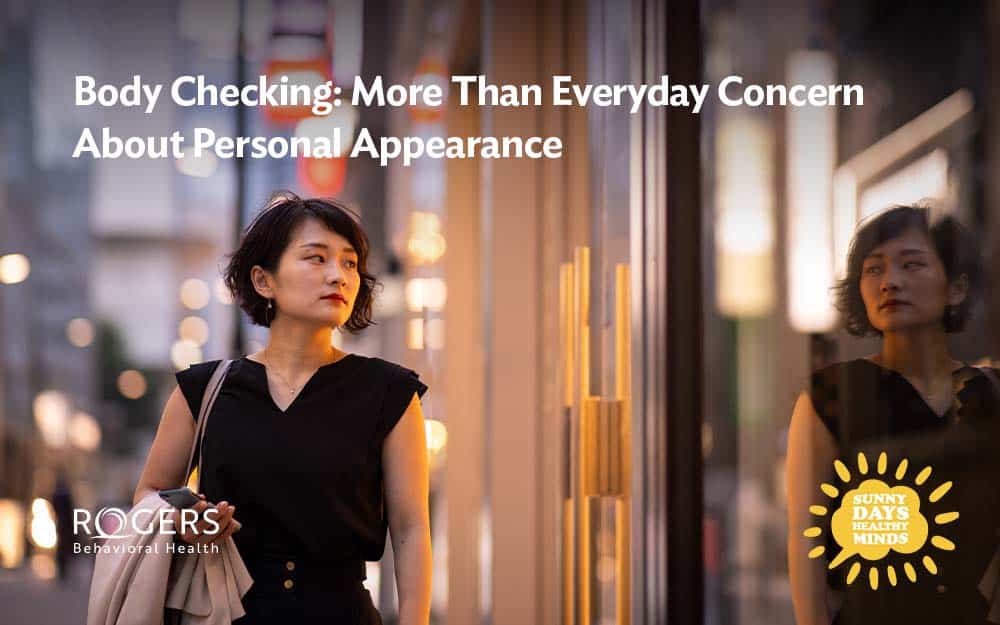
While everyone cares about their appearance, body checking goes beyond typical self-awareness. It can become a repetitive behavior linked to anxiety, body image concerns, and eating disorders.
As part of our Sunny Days, Healthy Minds series, Rogers Behavioral Health’s Maddie Boettcher, behavior specialist, Eating Disorder Recovery residential care for adults, shares common signs and how it can affect mental health and daily life.
What is body checking?
Body checking is common in people with eating disorders, such as anorexia nervosa and bulimia nervosa, where body image concerns play a big role. People do it to reduce their anxiety over how their bodies look, checking for changes in their size or weight.
Body checking behaviors include:
- Looking at oneself in the mirror or reflective surfaces
- Pinching, feeling, or measuring specific body parts
- Weighing repeatedly
- Hiding the body through certain clothing styles and sizes
It’s important to note that although it’s common for people with eating disorders, not everyone with an eating disorder does it.
How is body checking different from typical concerns about appearance?
Although looking at your body can be considered normal behavior depending on the context, body checking can turn into what’s known as a safety behavior for people with eating disorders. While it may seem helpful in the moment because it reduces anxiety, it actually reinforces the belief that anxiety-provoking situations are dangerous and need a response.
For example, if someone is afraid of gaining weight, they may engage in compulsive body checking throughout the day to ease their anxiety and try to avoid the feared outcome. Although they may notice a sense of relief, it should be emphasized that it’s usually short-lived. This becomes a cycle: anxiety over fear of weight gain leads to body checking, resulting in brief relief.
The difference between someone typically looking at themselves in the mirror and compulsive body checking comes down to the reason for the behavior.
How might someone who does body checking feel or perceive themselves?
Body checking can lead to:
- Frequent negative self-talk
- Comparison
- Low self-esteem
Due to the compulsive nature of body checking, a person can become hyper-aware of their perceived flaws and may tie their self-worth to their appearance. This may lead to shame, self-criticism, or embarrassment about their body. It may also result in avoiding going out in public or being around others.
How can body checking impact mental health?
Body checking can be associated with mental health challenges, specifically, eating disorders, and behaviors such as:
- Restriction
- Binge/purge cycles
- Calorie counting
- Compulsive exercise
- Laxative use
It can lead to lower self-esteem, which can cause symptoms of depression and higher levels of anxiety.
How might a parent know their child is body checking?
In addition to the behaviors I’ve mentioned, other signs include:
- Spending excessive or longer periods of time in the bathroom
- Comparing themselves constantly to others
- Avoiding certain activities because of body image distress, such as swimming or social events
- Changes in eating
Additionally, social media can influence body image distress. Be aware of your child’s social media apps and the type of content they’re viewing.
What should a parent do if their child is engaging in body checking?
To understand why your child may be engaging in body checking, it’s important to remain non-judgmental. Instead of telling them, “Just stop looking in the mirror so much,” it could be helpful to ask, “What is making you feel this way?” Approaching them with support and compassion can help you better understand the behavior and what may be causing it.
When might it be time to seek mental health treatment?
If body checking is negatively impacting your life or ability to function every day, it may be a time to seek mental health treatment and professional support, especially considering the association between body checking and eating disorders.
How can mental health treatment help?
Mental health treatment can help in four main ways:
1. Guides you to understand your body checking behaviors. A trained mental health clinician will ask questions to explore why you’re doing it, what purpose it serves, when it started, and what might be contributing to it.
2. Increases your awareness of behaviors and identifies any patterns, such as times, places, or situations that trigger body checking behaviors, so you can be equipped with tools to resist the urge.
3. Reduces the amount of anxiety associated with body image concerns and decreases body checking behaviors. By challenging these behaviors, you’ll notice that anxiety will peak in the beginning, but then decrease, helping you see that you can handle distress, and it won’t last forever.
4. Builds acceptance and tolerance of your body through body image work.
Rogers offers eating disorder treatment
Living with an eating disorder can feel overwhelming. Our compassionate teams can help you take the next step toward healing.
For a free, confidential screening, call 833-308-5887.
Part of our summer series, Sunny Days, Healthy Minds
Looking for more tips? Explore additional resources in our Sunny Days, Healthy Minds series to support mental well-being all summer long. Click here to learn more.