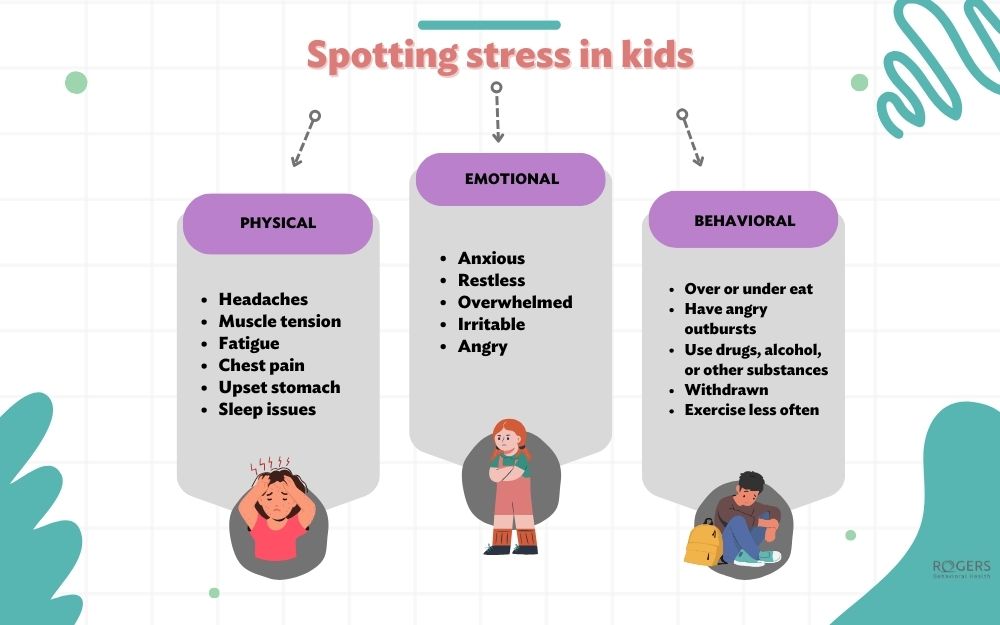
Stress: How parents can spot and help reduce it in children
Rogers’ Dr. David Jacobi discusses stress and how parents can spot and help reduce it in children.
Careers • Refer a Patient • Donate • Blog • Newsroom

Rogers’ Dr. David Jacobi discusses stress and how parents can spot and help reduce it in children.

Almost 3 in 5 teen girls in the U.S. feel persistently sad or hopeless, which is nearly a 60% increase and the highest level reported over the past decade. Dr. Peggy Scallon says many factors have contributed to the alarming rise in depression.

Over the past four decades, a growing body of evidence shows the negative health consequences of bullying. Kristin Miles, PsyD, psychologist, who oversees inpatient clinical programming on Rogers’ Oconomowoc campus, and Gene Yang, MD, MBA, attending psychiatrist for Rogers’ West Coast locations, answer questions about bullying and its effects.

ARFID is a serious eating disorder that many are unaware of. Here are 7 important facts to know about ARFID, including what ARFID is, effects of ARFID, symptoms, and treatment.

“My story starts with the fact that my earliest memories had some sort of fear involved. I remember being scared of school shootings, car accidents, trees falling on me, and anything that could involve harm or death to me.”

Starting the school year with new schedules, classmates, and experiences can cause feelings of excitement for some students, and nervous anticipation for others.

“Rogers was a last resort before I deferred starting college. I was 17 years young and had never spent that much time away from home before.”

Summer is often mistakenly viewed as an inconvenient or unnecessary time for residential mental health treatment. However, the same reasons people may believe this may actually make it ideal.

Hear how Rogers uses evidence-based therapy to get kids and their families on the road to healing.

At Rogers’ OCD and Anxiety Center, multidisciplinary teams use highly effective cognitive behavioral therapy to help kids and teens reduce symptoms and develop lifelong coping skills.
Give us a call today for an immediate screening.
Not ready to call? Reach out to Rogers online.