
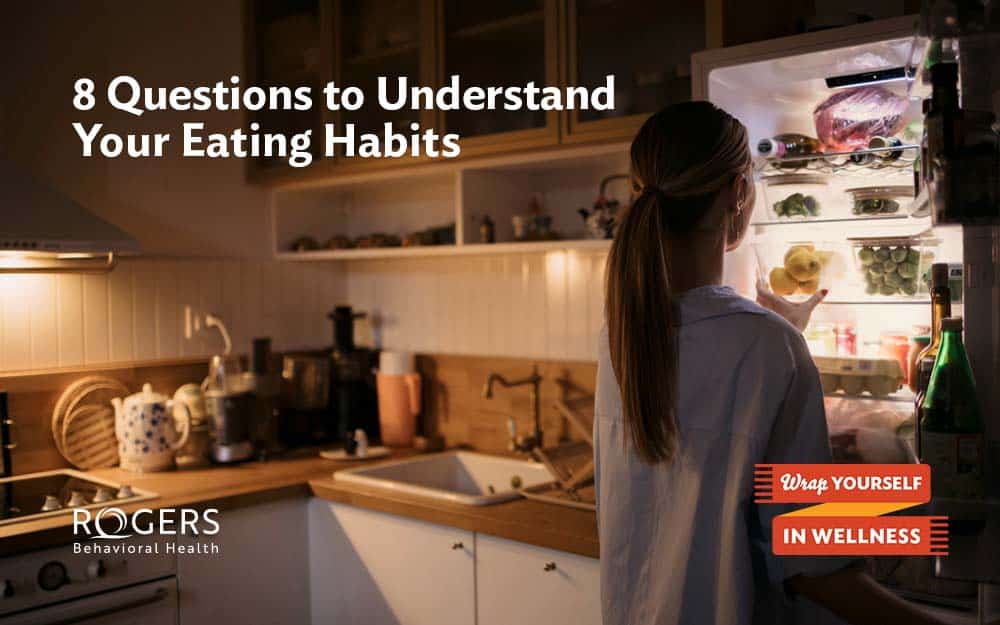
Have you ever found yourself reaching for food after a hard day at work or a fight with a friend? You’re not alone. Emotional eating is common, especially during times of stress or difficult emotions.
As part of our Wrap Yourself in Wellness series, Kathryn Eddingsaas, RD, CD, registered dietitian at Rogers Behavioral Health’s Silver Lake Outpatient Clinic, explains how emotional eating differs from physical hunger, and shares ways to become more aware of your eating habits without shame or judgment.
How does emotional eating differ from physical hunger?
First, it’s important to understand what hunger is. It can be understood in four broad categories:
- Biological: The body’s physical or internal signals of hunger and fullness.
- Taste: A desire for a particular food or flavor, such as something salty or spicy, without necessarily being biologically hungry.
- Practical: Using information or planning to make eating decisions. For example, eating lunch earlier because you know you’ll be busy during lunchtime.
- Emotional: Eating in response to emotions, stress, or other psychological experiences rather than physical hunger.
Physical hunger:
- Reflects the body’s need for energy
- Typically develops gradually
- Can be satisfied by a variety of foods
- Signs may include stomach growling, shakiness, low energy, or difficulty concentrating, which generally improve after eating
Emotional hunger: 
- Is often connected to a desire for comfort, distraction, stimulation, or relief from an emotional state
- May feel sudden or urgent
- Can occur following stress or an emotionally difficult experience
- May lead to eating that provides temporary emotional relief but rarely addresses the underlying emotion
Keep in mind that hunger and emotions can coexist without it automatically being “emotional eating.” Someone can be physically hungry and emotionally distressed at the same time. The goal is not to label every eating experience as “physical” or “emotional,” but to develop greater awareness so that you can best meet your needs.
Is emotional eating a way to avoid uncomfortable emotions?
Eating is meant to be enjoyable, pleasurable, comforting, and an important part of social and cultural experiences. Food provides so much more than just fuel. It also provides satisfaction, connection, and tradition. There is nothing inherently wrong with finding emotional enjoyment in eating.
Emotional eating can become a concern when food becomes the primary, or only coping mechanism for stress, difficult emotions, boredom, or discomfort. When eating is consistently relied upon to manage emotions, it can limit opportunities to develop other coping strategies and make it harder to identify or address underlying emotional needs.
Eating, especially foods that are high in sugar and fat, can activate the brain’s reward system and increase the release of dopamine, a neurotransmitter involved in motivation, reward, and learning. Over time, this process can reinforce emotional eating, resulting in the following pattern:
Uncomfortable emotion → eating provides temporary relief → eating becomes primary coping mechanism when feeling unwanted emotions.
What emotions are associated with emotional eating?
There is no single emotion associated with emotional eating. It may occur in response to:
- Stress, anxiety, worry
- Sadness, loneliness, hopelessness
- Boredom, restlessness
- Anger, frustration, or irritability
- Disappointment, emotional exhaustion
- Grief, shame, or self-criticism
- Replacing substances such as alcohol or drugs
Sometimes the emotional trigger isn’t immediately obvious.
How can I build awareness around my eating habits?
You can build awareness around your eating habits through:
Consistency: Eating every few hours can support more stable blood sugar and hormone levels throughout the day.
Nutrient variety: Include a variety of protein, carbohydrates, fats, and fiber in meals and snacks. This can help regulate hunger and fullness and reduce vulnerability to emotional eating when you’re under-fueled.
Building awareness is best approached with curiosity rather than judgment. A simple, nonjudgmental record over a period of time can help identify patterns.
What questions can I ask myself before eating?
Before eating, consider pausing and asking:
- What type of hunger am I experiencing?
- Am I noticing signs of biological hunger?
- When did I last eat? Was it a balanced meal or snack?
- What am I feeling emotionally or mentally right now?
- What might my body or mind need in addition to, or instead of, food?
It can also be helpful to notice what happens after eating. Did the food provide physical satisfaction, emotional relief, both, or neither?
The purpose of these questions isn’t to police food intake or create additional rules. Excessive monitoring can increase anxiety around eating. Instead, awareness should help you understand your patterns and respond with greater flexibility and compassion.
Is emotional eating an eating disorder?
Emotional eating itself is not an eating disorder. It’s a behavior that many people engage in. However, it can occur alongside an eating disorder or contribute to patterns that cause significant distress. For example, repeatedly eating large amounts of food while experiencing a sense of loss of control may be a sign of binge eating disorder or another eating-related concern.
Addressing emotional eating typically involves identifying and practicing other, more sustainable, coping strategies when difficult emotions arise.
What non-food coping strategies can help manage stress or emotions?
Depending on the situation, consider trying:
- Taking a short walk or getting fresh air
- Practicing slow, intentional breathing
- Journaling or writing down what you’re feeling
- Calling or texting someone you trust
- Taking a shower or bath
- Doing something creative, such as coloring or drawing
- Stretching, yoga, or another enjoyable form of movement
- Practicing mindfulness or meditation
If you or a loved one is struggling with emotional eating, recognize that these strategies likely don’t need to replace eating every time. Sometimes the most appropriate response is to recognize that you’re both emotionally distressed and physically hungry and give yourself permission to eat.
How can someone compassionately support a person who engages in emotional eating?
Loved ones and caregivers can help by approaching the situation without shame, criticism, or comments about the person’s body or food choices.
Ways to offer support include:
- Listen without immediately trying to “fix” the problem.
- Ask open-ended questions such as, “How have you been feeling lately?”
- Avoid labeling foods as “good,” “bad,” “cheating,” or “guilty.”
- Avoid commenting on how much someone is eating or what their body looks like.
- Encourage consistent nourishment.
- Reminders that emotional eating doesn’t reflect weakness or a lack of willpower.
- Ask how you can support them rather than assuming what they need.
- Encourage professional support if the behavior is causing distress or interfering with daily life.
What are signs that emotional eating may be a concern?
Occasional emotional eating is generally not a reason for alarm because food is comforting and enjoyable. It becomes more concerning when it:
- Happens frequently
- Feels difficult to control
- Causes significant distress, guilt, or shame
- Becomes someone’s primary way of managing emotions
- Leads to eating in secret because of shame or embarrassment
- Leads to extreme behaviors to compensate for eating, such as fasting, vomiting, or excessive exercise
- Causes persistent preoccupation with food and body image
Reaching out to a doctor, registered dietitian, therapist, or eating disorder specialist can be an important step. Support doesn’t have to wait until there is a diagnosable eating disorder.
Above all, emotional eating is best approached with curiosity rather than shame. Food can serve many purposes in our lives. Understanding the emotional needs underlying an eating pattern can help you develop more flexible and sustainable ways of caring for yourself.
Rogers offers mental health treatment
When life becomes too difficult to manage, we’re here to help with compassionate care that works for children, teens, and adults.
For a free confidential screening, call 833-308-5887.
Wrap Yourself in Wellness
For more expert insights on how you can care for your mental well-being this winter, click here.