
Can you give an example of a fixed versus a growth mindset?
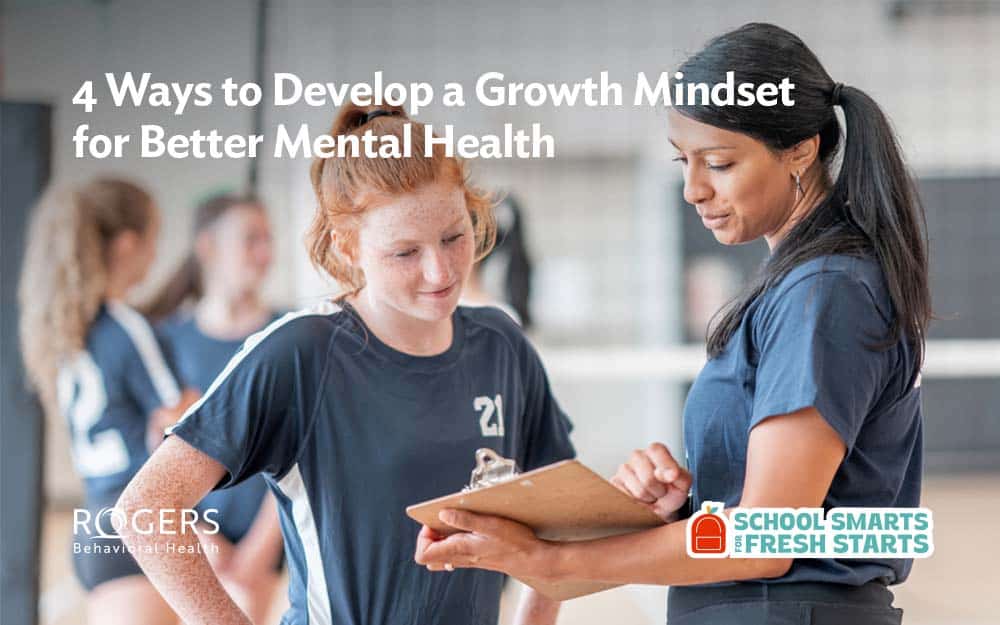
One example is a teenage girl who tries out for volleyball and doesn’t make the team. With either mindset, she’s going to have emotions. She might feel a mix of confusion, frustration, disappointment, or even relief. It depends on the individual. Where the mindsets differ is in the thoughts and behaviors that follow.
Fixed mindset example: “I can’t, so I quit.”
With a fixed mindset, she may have thoughts such as, “I guess I’m not good enough,” “I knew this was going to happen. I shouldn’t have tried out,” or “Why am I so stupid? This always happens to me.”
We know that our thoughts influence our behaviors. In this case, she might decide not to try out again and quit the sport altogether, even though she enjoys it and wants to be part of the team.
Growth mindset example: “I can learn from this and I’ll keep trying.”
Using the same example but with a growth mindset, she could have thoughts such as, “I wonder why I wasn’t chosen,” or “I’m curious about what the coach was looking for.”
Those thoughts could lead her to seek answers. She might meet with the coach for feedback about what she needs to work on to be considered for the team next year. Wanting to apply what she’s learned, she could spend time practicing, working with a trainer, or attending a skills camp.
How does having a growth mindset benefit our mental health?
Whether it’s not making the volleyball team, being passed over for a promotion, or getting stuck in traffic on the way to work, having a growth mindset helps us:
- Adapt
- Embrace difficulties
- Approach challenges with curiosity
Don’t get me wrong —even with a growth mindset, when life throws you curveballs, you’re still going to have feelings about it. The difference is that with a growth mindset, you’re better able to notice your thoughts and emotions and move forward faster and more effectively. In other words, you develop a more balanced perspective and healthier way of approaching life.
With a fixed mindset, however, you’re more likely to:
- Ruminate on negative thoughts
- Get stuck in negative emotions
- Have higher levels of stress
How to build growth mindset
There are several steps you can take to develop a growth mindset:
1. Become more aware of your thoughts
- How do you talk to yourself? Are you usually kind or harsh?
- Start noticing if you approach challenges with more of a fixed or growth mindset.
- How do you engage with your thoughts? Do you tend to dwell on them or do you let them come in and out of your mind without paying too much attention. With time and practice, you’ll begin to notice patterns.
2. Learn to hit the pause button
- How can you reframe the situation and come back to the present moment?
- Ask, “What’s causing me to have strong emotions?” It’s okay to do some self-reflection without shaming yourself.
- Make a course correction. One way is to add the word “and” to your internal dialogue. For example: “This is hard. I’m not happy about it and I’m going to continue to give it my best shot.”
3. Practice, practice, practice
You’re learning a new habit, and that takes practice and persistence. With patience, you’ll get better and will grow in confidence. Even if you lean toward a growth mindset, you’re going to have a fixed mindset moment from time to time. Remember, If you get “off track” mid-morning, you still have the rest of the day to keep practicing.
4. Aim for progress, not perfection
- Set yourself up for success by having realistic expectations. Think about SMART goals.
- Periodically check in with yourself about your goals.
- Hold yourself accountable and be sure to celebrate the wins!
How can parents help their children develop a growth mindset?
I think the number one way parents can help their children develop a growth mindset is to practice what you preach. All of us are sponges, especially children and teens. They hold their loved ones in high regard, and they’re always watching how their parents or caregivers navigate their day, moment by moment.
Additionally, talk openly about growth mindset as a family and create shared goals that encourage learning and persistence.
What role does a growth mindset play in mental health treatment?
Having a growth mindset is a huge part of mental health treatment, especially when it comes to recovery.
By seeking support, you’re embracing a growth mindset because you’re wanting change. In order to maximize that, I recommend coming into treatment with curiosity. How can you lean into exploring the symptoms that you’re experiencing and why you’re here? Be willing to partner with your treatment team and share details that could feel uncomfortable, may be embarrassing, or stir up all sorts of different emotions.
The goal of treatment is to help you see it as an opportunity for growth rather than view it as a hurdle, roadblock, or barrier, which is more of a fixed mindset.
I talk with kids at Rogers’ OCD and Anxiety Center about their thoughts being like a television remote. Maybe right now you’re kind of stuck on a channel and the volume is really high and getting all of your attention. Our goal is to give you the power over the remote so you can control what channel you’re on and how loud the volume is. With a growth mindset, you’re better equipped to keep moving forward instead of getting stuck, and know that whatever happens, good or bad, it’s all part of the journey.
Rogers offers mental health treatment
Our team of experts will walk alongside you on your road to recovery.
Take the first step. Call us for a free confidential screening at 833-308-5887.
Part of our back-to-school series, School Smarts for Fresh Starts
Looking for more back-to-school tips? Click here for additional resources from our experts.