

How does bullying impact mental health?
Dr. Stephanie Eken, Rogers’ regional medical director, helps us understand the short and long-term effects of bullying.
Dr. Stephanie Eken, Rogers’ regional medical director, helps us understand the short and long-term effects of bullying.

Growing up, Dylan seemed to be on the right track with good grades and lots of friends, but by the end of middle school, he was already in engaged in drinking alcohol, and smoking cigarettes and marijuana. The downward spiral continued for several years, even after he became a father. It turned out that addiction wasn’t the only hurdle he had to overcome.

For treatment to be successful, you need a certain level of trust with your therapist. But apart from just reading a bio, how do you find someone that’s a good fit for you? Rogers’ Chad Wetterneck, PhD, clinical supervisor, has suggestions for how to research and choose a therapist for trauma and PTSD.

Did you know that about 5 million adults in the U.S. are affected by posttraumatic stress disorder (PTSD) every year? Take our 7-question confidential quiz that can help determine if you or someone you know has a tendency toward PTSD.

After Kristy experienced a traumatic event in her life, she found herself struggling—with an eating disorder she didn’t understand and stuck in a revolving door of mental health outpatient clinics.

The sudden death of a loved one. A natural disaster. Abuse or assault. More than half of the population in the U.S. will experience at least one of these traumatic and life-altering events.

First responders, veterans, children of abusive homes—when it comes to those it affects, PTSD knows no boundaries. Learn the signs to know when the after effects of trauma have crossed the line into full blown posttraumatic stress disorder (PTSD).
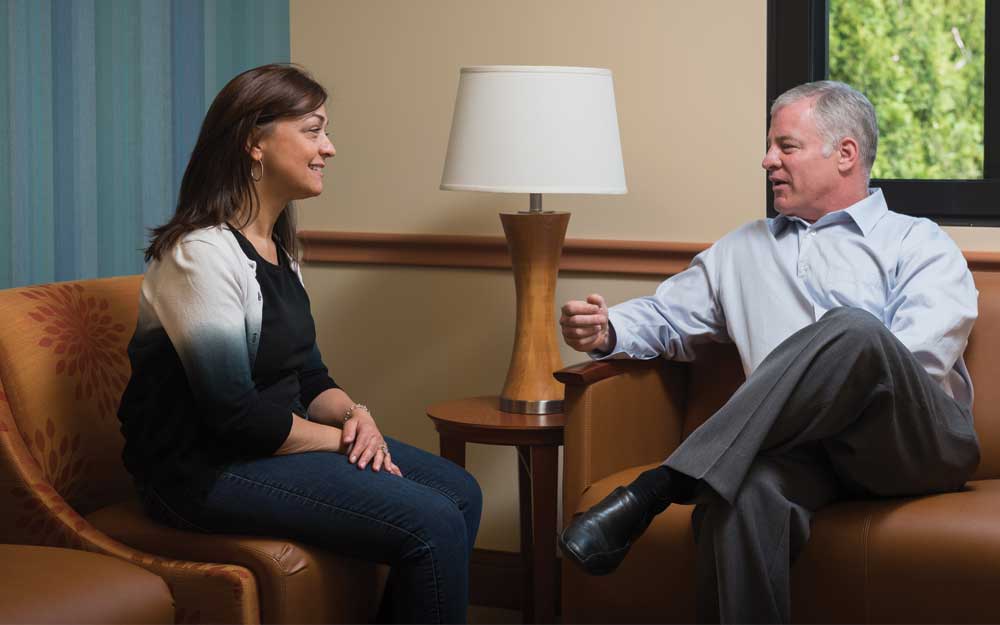
If you have posttraumatic stress disorder (PTSD), just thinking about the event that’s changed your life and caused so much pain and anxiety is agonizing, but prolonged exposure can help.

As children in your community participate in this year’s trick-or-treat, many will shriek with excitement from the scary costumes, ghoulish décor and other Halloween horrors. The day after, the frightening excitement will melt away and children will return to their usual fall time schedules. But for thousands of children with anxiety in the United States, dealing with real fear every day of the year is reality.

Every day, patients with trauma or posttraumatic stress disorder (PTSD), courageously work with therapists, nurses and other professionals to decrease anxieties surrounding horrific events. Over time, the trauma patients endure and the anxieties that come along with it can become harmful for care providers.
