Hannah’s story
After months of treatment elsewhere and no improvements, Hannah was recommended for residential care at Rogers to address her posttraumatic stress disorder (PTSD). The decision would prove crucial to her mental health journey.
Careers • Refer a Patient • Donate • Blog • Newsroom

After months of treatment elsewhere and no improvements, Hannah was recommended for residential care at Rogers to address her posttraumatic stress disorder (PTSD). The decision would prove crucial to her mental health journey.

More than 8 million American adults suffer from PTSD. Rogers’ Chad Wetterneck, PhD, and Jennifer Parra Nelsen, MA, LPC, recently took part in a Q&A to talk about the importance of understanding trauma, PTSD, and the treatments available.

Sleep—we spend one-third of our lives doing it, yet what seems like it should be second nature is a struggle for up to one-third of adults.

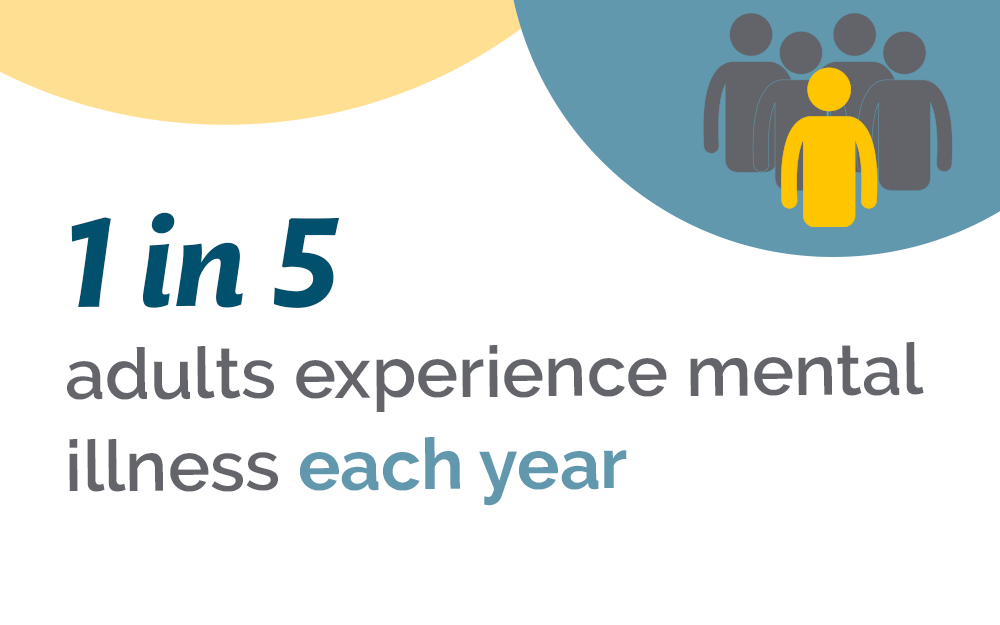
Every May since the mid-1900s, Mental Health Month has served as a time to help spread awareness and reduce stigma surrounding mental health and addiction. Mental Health America has chosen “Back to Basics” as this year’s theme. In this spirit, we’ve put together information to help you understand common mental health conditions, where to find resources, and how to find treatment.

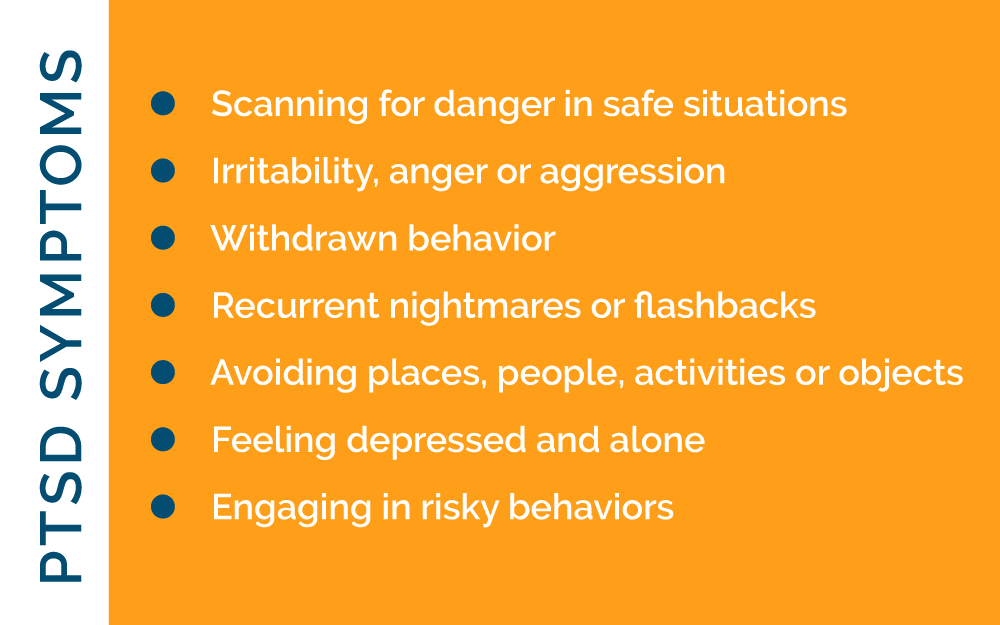
After experiencing trauma – an individual’s response to witnessing a frightening event – a person may develop posttraumatic stress disorder (PTSD).

Throughout COVID-19, there’s a heightened need for mental health and addiction care. In response, Rogers Behavioral Health began serving patients virtually across the country through Rogers Connect Care — a telehealth treatment option for people who would benefit from specialized partial hospitalization or intensive outpatient levels of care.

If a friend or loved one tells you they’ve been in treatment for mental health or addiction, you may be wondering about the best way to respond. Rogers’ Sue McKenzie Dicks, vice president of healthy culture at Rogers Behavioral Health, shares some common missteps and supportive things to say so your friend or loved one feels validated and understood.

Like many mental health conditions, there are many myths surrounding posttraumatic stress disorder (PTSD). While they may seem relatively harmless, it is important to understand why mistaking myths for facts can be harmful.

June is Men’s Health Month, a time when men are encouraged to take better care of themselves, both physically and mentally.

Posttraumatic stress disorder (PTSD) affects approximately 8 million U.S. adults each year. First recognized in 2014, PTSD Awareness Month is an important opportunity to share resources and hope for those who are suffering.
Give us a call today for an immediate screening.
Not ready to call? Reach out to Rogers online.