

Preparing for another season of 13 Reasons Why
The recent release of 13 Reasons Why season 2 is prompting an essential dialogue in our communities. Learn how parents can use the show to open lines of honest communication with their teens.
The recent release of 13 Reasons Why season 2 is prompting an essential dialogue in our communities. Learn how parents can use the show to open lines of honest communication with their teens.
Anyone can help prevent suicide—you don’t have to be a mental health professional. There are countless examples of silent heroes who recognize emotional suffering in people, respond compassionately, and take action to offer hope.
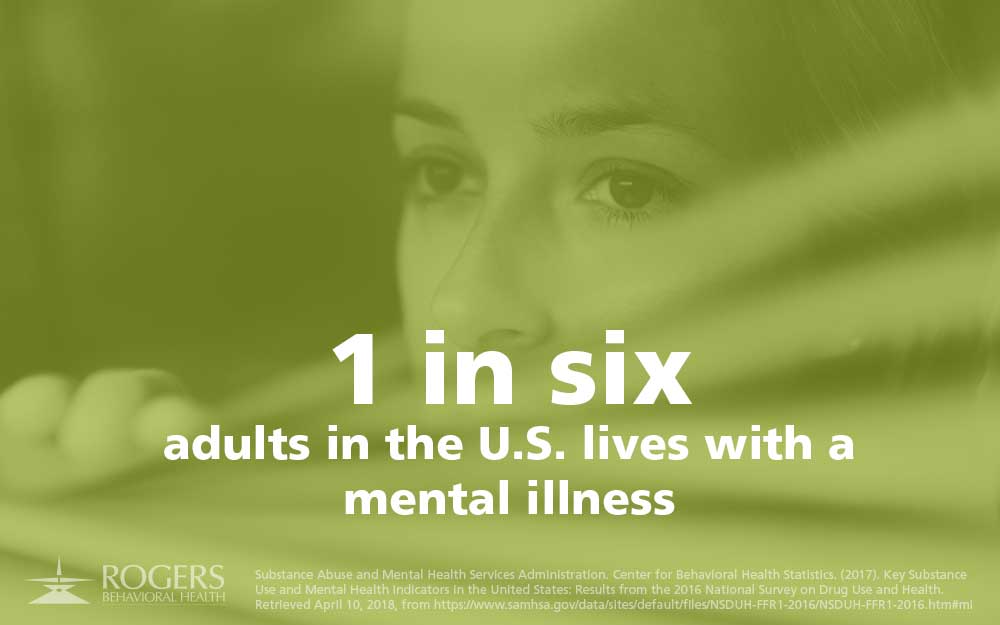
May is Mental Health Month! Learn more about the designated month and what can be done to help accomplish its goals of reducing the stigma around mental illness.
As a parent, seeing your child struggling with the expected challenges of childhood and adolescence is hard. Learn about Friend and Family University, an educational program that’s offered to parents of children in treatment at Rogers.

Summer school, summer camp, summer tutors. We take great lengths to ensure kids maintain academic gains over summer break. But are we doing the same to maintain their mental health?

Read heart-felt narratives submitted by members of our team in recognition of our 110th anniversary to catch a glimpse of the heritage that continues today.

At the 2017 iaedp Symposium, two FOCUS Program staff members earned the top prize in the Imagine Me Beyond What You See sculpture competition.

With the holiday season upon us, the rush to find the perfect gift or pressure to prepare the perfect meal can be overwhelming. If

When a teen breaks a bone, friends and family often ask for “the story” of how the bone broke, how long it will take to heal and may even ask to sign the cast. But when a child is challenged with a mental health difficulty, it can be tricky for him or her to decide whether to share their journey, when to share it or how to share it. Wisconsin’s Initiative for Stigma Elimination (link is external) (WISE) created a program—“ Honest, Open, Proud-High School (link is external)” (HOP-HS)—to proactively empower teens to make thoughtful decisions about disclosing their story (link is external).

Statistics show that this time of the year, 45 percent of us are going to make a New Year’s resolution, but of that percentage, only 26 percent will maintain our resolution past the first six months. It seems as though the odds are stacked against most of us when it comes to changing our ways and making major life changes, but Sue McKenzie, co-director of Rogers InHealth (link is external), insists that achieving lasting change is possible not only for New Year’s resolutions, but for achieving mental health as well.
