
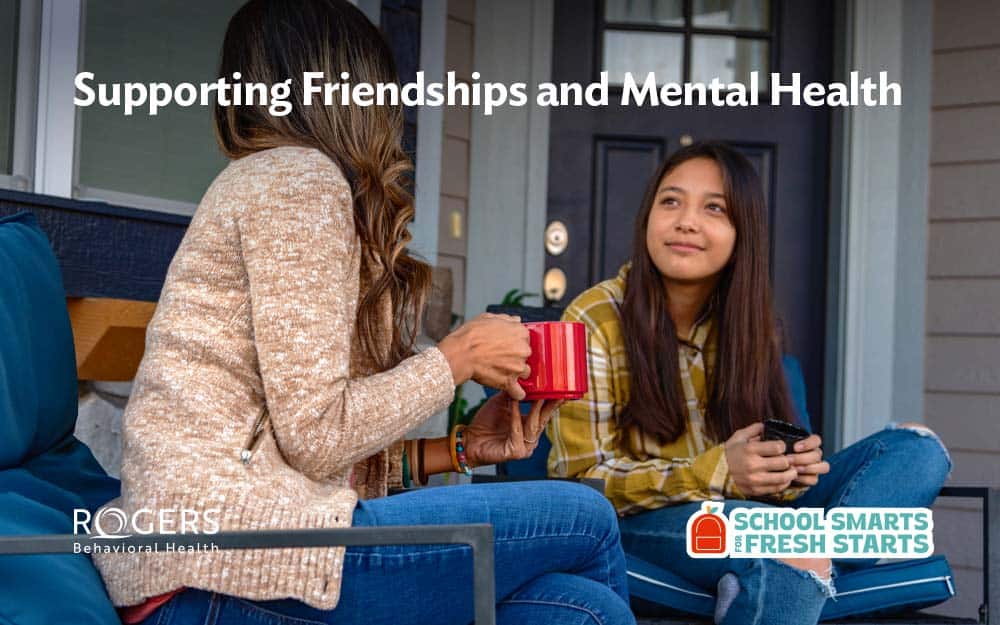
Friendships are an important part of a child’s life and development. But when a child is struggling with their mental health, connecting with friends and maintaining those relationships can become more difficult.
Rogers Behavioral Health’s John Widish, MSW, LCSW, therapist at the OCD and Anxiety Center for adolescent residential care, continues School Smarts for Fresh Starts series. John explains how mental health challenges can affect friendships and give recommendations for how to navigate social struggles due to mental health.
How can mental health challenges make it harder for children to maintain friendships?
Mental health challenges can really isolate children. They’re afraid to tell peers what they’re going through for fear of judgment. Without support, these challenges can become more overwhelming and distracting, affecting a child’s mood and daily life.
As kids begin to struggle more, they tend to withdraw from their friends. What they used to find enjoyable now creates worry and overthinking. Many friends tend to be polite and patient, but when they notice that a child isn’t returning texts and declines invites to hang out, most stop asking. This can isolate the child even more.
What are early signs that a child may be struggling socially due to their mental health?
Early signs that a child is struggling socially due to mental health challenges include:
- Withdrawing from social interactions more often
- Losing interest in activities or sports they once enjoyed
- Spending more time isolating in their room or on technology
- Expressing fears repeatedly that others don’t like them or are judging them
- Having school anxiety or refusing to go to school
- Showing less emotion than usual or having stronger emotional reactions
How can parents support a child who begins withdrawing from friendships?
If you begin to notice that your child is withdrawing from friendships, talk to them. While it may be an uncomfortable conversation, it’s an opportunity to build understanding and strengthen the relationship. Your child has the chance, without judgment, to describe their experience. Maybe they noticed that their peers are growing apart and are interested in different things. However, it’s possible that withdrawal is an early sign of a mental health challenge, so it’s important to recognize it and address it early.
How can parents support a child who feels left out, rejected, or misunderstood by peers due to their mental health challenges?
Communication is key! Here are five recommendations:
1. Spend time talking with your child about their experience.
2. Validate that it can be difficult to navigate social relationships. That strengthens bonds and helps kids feel connected and understood.
3. Consider providing social coaching, which can allow your child to build confidence by navigating it on their own.
4. Advocate for your child, if needed, by talking with parents of other children.
5. Check with your child’s teacher or guidance office on how they might be able to support.
If nothing changes after you’ve taken these steps, it may make the most sense to shift toward separation and acceptance of the situation.
How can parents help children talk with friends about mental health challenges in an age-appropriate way?
Normalizing the experience of all emotions is a great place to start. Everyone feels sad, afraid, worried, and anxious at times, as well as happy, joyful, and excited.
Encourage younger children to talk about how situations make them feel. Remind them to listen to peers when they open up to them.
Older children can do the same while exploring more complex life experiences, changes in their mood, and healthy ways to cope with intense emotions.
How can parents navigate conversations with other parents about their child’s mental health and social needs?
The amount of information you decide to share probably depends on the closeness of the relationship. You may choose to share specific areas where your child needs support or ways that other parents and children can help. This may be the best approach when you’re unsure how someone might respond to information about your child.
If you feel comfortable, you may decide to share your child’s formal diagnosis to help explain certain behaviors or challenges. It can be difficult to have these conversations, but they can be extremely important in helping your child get the support they need. Other adults may notice that your child is struggling, so hearing directly from the parents can foster understanding and reduce stigma around the behaviors.
When should parents consider seeking professional guidance for friendship or social struggles?
You should consider seeking professional guidance for friendship or social struggles when:
- Your support doesn’t seem to be helping
- Your child’s mood appears to be worsening
- Your child is increasingly avoiding social interactions or school
- Your child’s grades are slipping
- Your child has either no interest or excessive worry about how they’re perceived by peers
Rogers offers mental health treatment for children and teens
We know how difficult it is when your child is struggling with their mental health. We want to help.
At Rogers, we’ve been providing compassionate and effective care for children, teens, and adults for more than a century.
For a free, confidential screening, call 833-308-5887.
Part of our back-to-school series, School Smarts for Fresh Starts
Looking for more back-to-school tips? Click here for additional resources from our experts.