
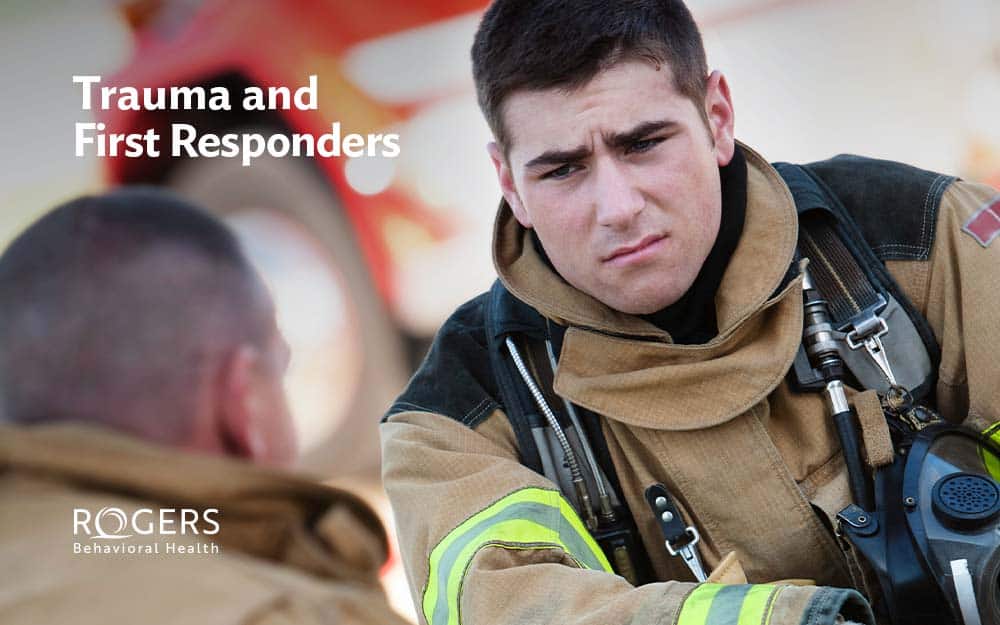
First responders run toward danger when the rest of us run away. Day after day, they witness accidents, violence, and loss, putting their mental health at risk.
Rogers Behavioral Health’s Jennifer Parra Nelsen, LPC, LMHC, ICS, clinical director, Trauma Recovery residential care for adults and Fire Watch explains why access to the right mental health support is essential for protecting the well-being of those who protect us.
Why are first responders at higher risk for mental health challenges?
First responders are often the first on the scene after a difficult or traumatic event. They don’t have always time to process what they’ve seen before the next call comes in. Repeated exposure to trauma can significantly affect their emotional and mental well-being.
Unfortunately, many departments don’t offer mental health support on a consistent, ongoing basis to counteract these effects. Oftentimes preventative actions aren’t taken either, such as creating communities that combat mental health stigma or build resiliency. The importance of taking care of your mental health has yet to be built into the culture.
What are common mental health challenges first responders face?
The most common mental health challenges first responders deal with are:
- Trauma
- PTSD
- Anxiety disorders
- Depression
- Substance use
Here are concerning statistics:
| General population | First responders |
About 6 to 7% of people experience trauma then develop PTSD
| Up to 30% or more experience trauma and develop PTSD |
Not only are they at a higher risk of developing mental health disorders, but they’re also at a higher risk of suicide, which is why we’re so concerned about this particular population. They sacrifice so much and we want to make sure they have what they need to live a life they value.
What are early warning signs that a first responder is struggling with their mental health?
Early warning signs that the first responder may be struggling with their mental health include:
- Increased substance use
- Neglecting personal hygiene
- Not taking care of work equipment
- Withdrawal or isolation
- Increased irritability
- Mood changes
- Engaging in risky behaviors
- Loss of motivation
- Loss of confidence
- Calling in sick or arriving late
- Trouble concentrating
- Changes in appetite
- Fatigue
- Difficulty sleeping
- Conflicts with peers, friends, or family
What prevents first responders from seeking support?
Stigma commonly prevents first responders from seeking the support they need. It can show up in several ways:
Internal stigma:
What do they believe about mental health? How were their beliefs about mental health shaped? Do they judge themselves or others for expressing emotions or asking for help?
External stigma:
What would peers think if they shared how they’re feeling? Would they be seen as weak for admitting fear, sadness, or distress after a call? Would others question their ability to do their job?
Structural stigma:
Is mental health openly discussed within the organization? Are resources and debriefings available after difficult events? Is there a fear that getting mental health support could negatively impact their job security?
How can first responders protect their mental health?
I have eight recommendations for how first responders can protect their mental health:
1. Focus on the things you can control in the present moment
2. Notice your emotions and how you express them
3. Practice basic self-care, like eating well and getting enough sleep
4. Reflect on the expectations you place on yourself and whether they are realistic
5. Limit time on social media because that impacts your nervous system
6. Stay connected with your support system
7. Create transition rituals between work and home, such as listening to music or a podcast on the way home
8. Pay attention to how you talk to yourself: Am I saying things like, “You should just get over it” or “You need to tough it out?”
How can Rogers Fire Watch program help first responders?
Rogers’ Fire Watch program creates a culture of inclusivity for first responders. Everyone involved in the program has lived experience, or a close connection to someone who does, which helps reduce stigma and build trust.
You don’t have to come in and explain yourself. No one is judging you. No one is thinking you’re unfit for duty. We’re here to normalize what you’re feeling and give you space to process with people who truly get it.
I want first responders to know that mental health challenges are built into the work you do. Just like going to the gym helps you maintain and improve physical strength needed for the job, mental health support helps you build strength and resiliency for the mental demands that come with the job.
By understanding the brain, how emotions work and how to move through them, and building mental strength, you’ll be better equipped to navigate the challenges that are unavoidable.
Rogers’ Fire Watch program helps first responders
Rogers’ Fire Watch program is a virtual outpatient program designed only for Veterans and first responders in Wisconsin, Illinois, Minnesota and Florida. No matter the length or details of your service, you have a trusted, safe space at Rogers.
You deserve a trusted, safe place to heal. Contact our Fire Watch team directly at 833-308-5887 for a free and confidential call for information, screening and scheduling.
First responders are at higher risk for PTSD, trauma-related conditions, anxiety, depression, and substance use disorders due to repeated exposure to stressful events.
Signs may include irritability, withdrawal, sleep problems, fatigue, changes in mood or appetite, and increased substance use.
Stigma is a major barrier, including fear of being judged by peers, concerns about job consequences, and beliefs about needing to “stay strong” without help.
Healthy sleep, staying connected with others, stress management, limiting social media, and creating routines between work and home can all help.
