
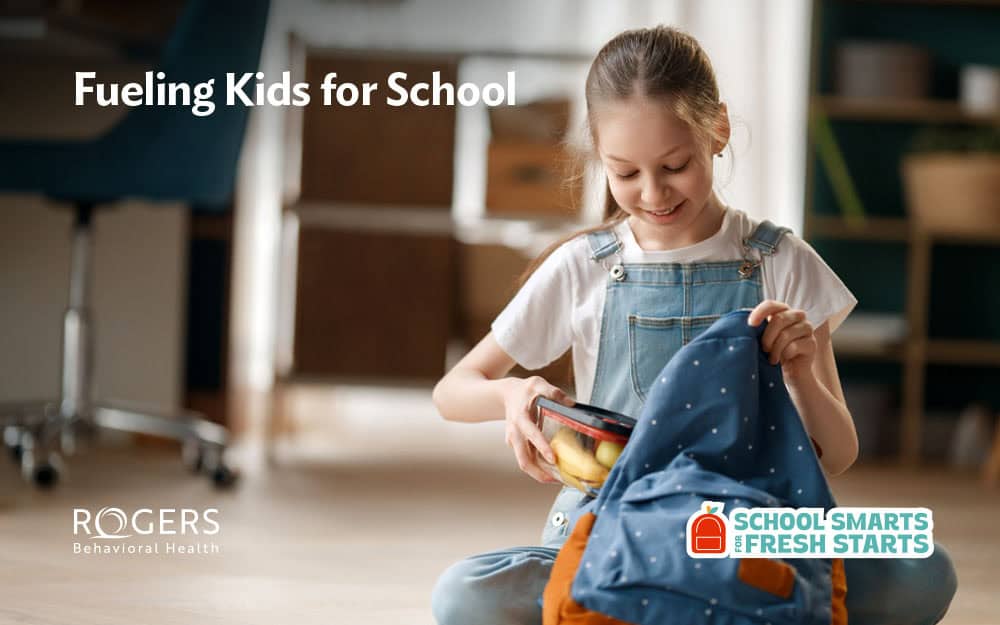
Back-to-school season means packing lunches, planning after-school snacks, and juggling meals around sports, activities, and homework. With so much to manage, how can you make sure your child is getting the nutrition they need to feel and do their best?
Rogers Behavioral Health’s Melissa Moody, registered dietitian, MS, RDN, CD, continues our School Smarts for Fresh Starts series. She explains why the food kids eat matters and gives practical tips for building healthy eating habits during the school year.
How does nutrition affect a child’s mood, energy, and focus?
Good nutrition sets kids up for success in school and everyday life. What they eat affects their mood, and their mood affects what they eat.
During digestion, food breaks down into usable nutrients including glucose, which is the body’s preferred source of energy. Glucose is most readily available in carbohydrates, such as:
- Grains (rice, oats, quinoa, etc.)
- Bread, pasta, crackers
- Legumes (beans, lentils, chickpeas, etc.)
- Fruit and starchy vegetables (potatoes, corn, peas, etc.)
A lack of carbohydrates can impact the brain’s activity and ability to concentrate and recall information. Blood sugar can drop, leaving a child feeling more irritability and emotional.
Why are regular meals and snacks important for kids during the school year?
Busy schedules can make consistent meals and snacks challenging.
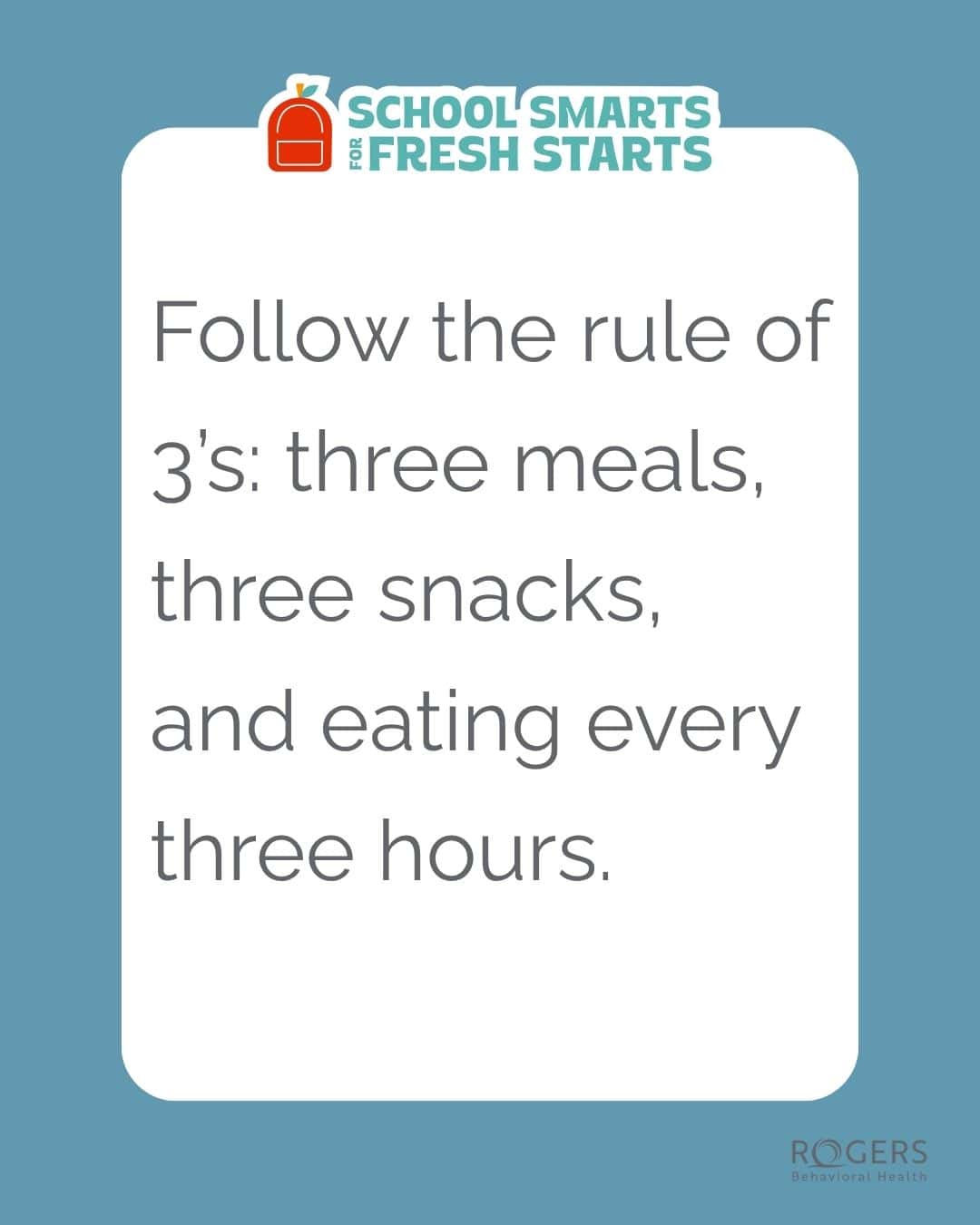
Follow the rule of 3’s: three meals, three snacks, and eating every three hours. Children’s hunger cues may not be reliable. Don’t wait until your child says they’re hungry before offering them something to eat. Children do best with regularly spaced meals and snacks in between.
What foods support steady energy, focus, and emotional well-being?
The goal for every meal is a balance of nutrients, including:
- Carbohydrates
- Protein
- Added fat
- Fruits
- Vegetables
- Fiber
Water is an important part of a child’s nutrition and the best beverage choice. It helps with digestion, regulates body temperature, and prevents dehydration, especially on hot days or when kids are more active. Picking a favorite reusable water bottle can be an easy way to encourage kids to drink more water throughout the day.
Breakfast ideas
Including protein and fruit or vegetables is an easy way to add fiber. Make a breakfast of nutrient-dense foods that leaves kids feeling comfortably full and energized. Ideas include:
- Greek yogurt, granola, and fruit
- Whole wheat pancakes, fruit, and milk
- Whole wheat toast with peanut butter, or scrambled eggs with bell peppers and onions
- Smoothie with Greek yogurt (or nondairy alternative), frozen fruit, and oats (can also put in a half scoop of protein powder)
Lunch ideas
School lunches are usually required by state law to meet certain dietary requirements that support well-balanced eating, but parents can pack lunches if time and finances allow.
Lunch-packing tips include:
- Use an easy formula, such as sandwich + fruit + veggie + dairy
- Sandwich can be replaced with a wrap, protein waffles, oatmeal and hardboiled egg, or crackers and deli meat, if it includes carbohydrates and protein
- Dairy can be a yogurt, cheese stick, or school milk
- Vary fruits and veggies as able
- Throw a small treat or sweet note in there, too!
Dinner ideas
I recommend following the above formula if you’re making dinner at home. If you’re eating on-the-go, consider packing dinner when you’re packing lunch.
Additional family-style meal examples include:
- Whole grain pasta with meat sauce and either a side of vegetables or incorporating that into the pasta sauce
- Tacos with meat or tofu, vegetables, cheese, and side of fruit
- Pasta or rice bake with ground turkey, broccoli, and cheese, served with a side of fruit
What are easy snack ideas that support kids’ well-being between meals?
Pairing carbohydrates with protein or healthy fats helps balance blood sugars, which keeps kids’ energy levels steady and helps them feel satisfied. It’s also a great way to introduce them to different foods.
Snack times are usually morning/at school, afternoon/after school, and, as needed, evening after dinner or sports/activities. Don’t be afraid to make a mini version of a meal for a snack!
Snack examples include:
- Yogurt and granola
- Graham crackers or apple slices and peanut butter
- Carrots and hummus or ranch
- Cheese and crackers
- Applesauce and string cheese
- Protein bars (check the nutrition label for 5 grams of protein, less than 10 grams of sugar, and ideally 2-3 grams of fiber)
What are simple ways to build healthy routines during busy school days?
I have four recommendations to help you start the school year strong:
1. Begin making small changes one to two weeks before school starts.
- Go to bed earlier
- Practice the morning routine
- Eat healthy snacks throughout the day
2. Allow your child some choices.
- For example, ask, “Do you want carrots or snap peas in your lunchbox?”
- Explain in simple terms the health benefits of eating certain foods. For example, “Make sure you have your sandwich today so you can keep growing strong and smart!”
3. Plan ahead as much as possible.
- Chopping vegetables, making a crockpot meal, or packing snacks ahead of time can help make busy mornings and evenings feel more manageable.
4. Involve children in grocery shopping and/or meal prep if they’re old enough.
- It may take some time in the beginning, but it will eventually teach them life-long skills. It’s also something to do together.
What are signs a child’s eating patterns may be affecting their mood or behavior?
You may become concerned and want to seek additional support if you’re noticing your child:
- Eating less overall
- Restricting certain main food groups
- Refusing to eat certain meals at home or at school
These changes may point to bigger issues such as disordered eating or avoidant/restrictive food intake disorder (ARFID). Children experiencing anxiety, depression, OCD, or other mental health challenges may also struggle with eating a variety of foods, eating enough or too much, or using eating to cope with their emotions.
A child’s eating patterns may negatively impact their mood or behavior. If you notice changes in their energy levels or moods, assess their sleep, food intake, and hydration status. Reach out to your child’s pediatrician for further evaluation.
Building healthy habits that work for your family
There’s so much nutrition information available that sometimes it can cause “analysis paralysis” for parents. There’s no magic trick for getting your children to eat their lunch at school or to eat all their vegetables at every meal. The best thing you can do is offer a variety of nutrient-dense foods at three meals and two to three snacks per day. The healthiest habits are the ones that work for your family’s lifestyle, including your schedule budget, and food preferences.
What are additional resources?
For more information, check out:
https://nutritionsource.hsph.harvard.edu/healthy-eating-plate/
https://nutritionsource.hsph.harvard.edu/carbohydrates/
https://nutritionsource.hsph.harvard.edu/kids-healthy-lunchbox-guide/
https://healthyeatingresearch.org/tips-for-families/ages-2-8-feeding-recommendations/
https://www.cdc.gov/healthy-weight-growth/tips-parents-caregivers/index.html
Rogers offers mental health support
At Rogers, registered dietitians are an important part of the treatment team, helping you achieve your recovery goals.
Call 833-308-5887 for a free, confidential screening.
Part of our back-to-school series, School Smarts for Fresh Starts
Looking for more back-to-school tips? Click here for additional resources from our experts.