
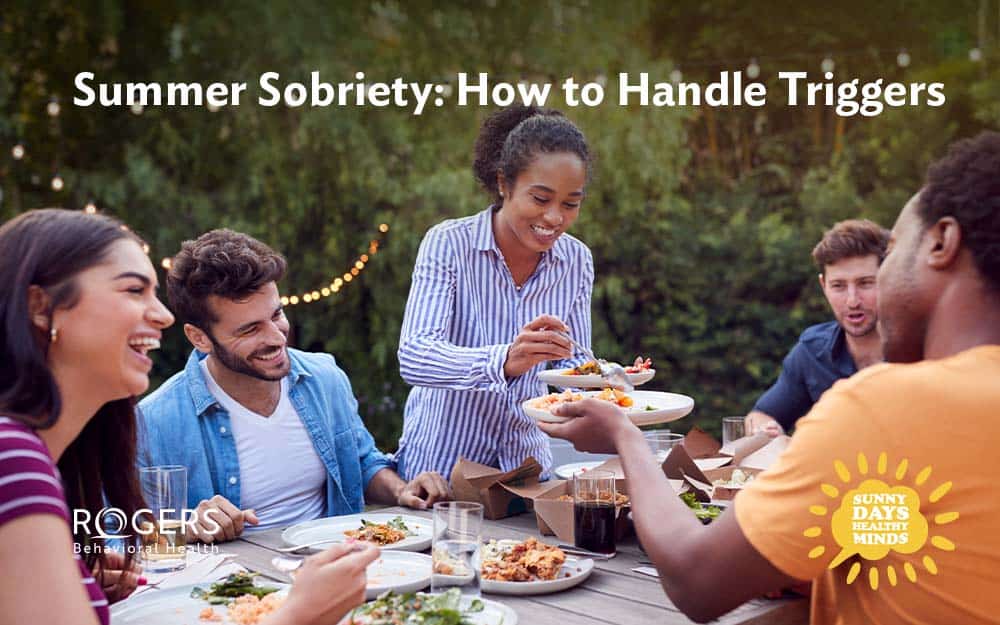
Summer is a fun season of gatherings and celebrations. For someone in recovery from substance use, these events can bring unique challenges.
As part of our Sunny Days, Healthy Minds series, Rogers Behavioral Health’s Laura John, NCSE, LICSW, LCSW, ICS, CSAC, clinical executive director, Mental Health and Addiction Services, and Michelle Stewart, national certified peer recovery support specialist (NCPRSS), share practical strategies, healthy routines, and recovery-friendly activities to help you enjoy the season while protecting your recovery.
All the insight provided is influenced by our own experiences, struggles, and triumphs in long-term recovery from substance use. We are both living a full and meaningful life in recovery.
Why are summer gatherings harder for someone in recovery?
Summer brings warmer weather when we often gather with friends and family. Because intimate gatherings are more common, they can feel harder to manage than large public events. This may be due to pressure, feeling watched, needing to explain why you’re not drinking or using substances, or worrying that you’re missing out.
Many people associate summer activities like camping, boating, biking, and picnicking with having an alcoholic beverage. This can cause anxiety and increase cravings.
It’s also very common for major holidays like Memorial Day, Fourth of July, and Labor Day to be associated with substance use. It can be difficult to find alternate ways to celebrate in recovery.
Common summer relapse triggers and why they happen
Summer gatherings and vacations can create unique relapse risks for people in recovery from substance use disorders. Common triggers include:
Social pressure: Events like barbecues, lake days, festivals, and holidays often center around alcohol or other substances. You may face pressure or feel uncomfortable declining.
Nostalgia: You may find yourself wishing for the “good old days” and talking with family or friends about past substance use in ways that unintentionally glorify it.
Associations: Listening to the same music, reconnecting with old friends who used substances, or returning to certain places associated with past use can also trigger cravings or emotional responses.
Disruptions to routine: This can increase risk if recovery supports like meetings, therapy, or regular self-care practices are paused.
How to plan ahead for summer events
Here are ten steps you can take to plan ahead, manage triggers, and support your recovery during summer gatherings:
1. Attend a recovery meeting before or after an event to process feelings and experiences.
2. Bring a trusted support person to gatherings.
3. Ask if a sponsor can be available by phone to provide additional accountability and encouragement.
4. Have an exit plan. Identify a person you can count on for support or a ride home, ensure you have money for a Lyft or UBER if needed, and decide what you’ll say if you need to leave early.
5. Attend events earlier when there’s a higher likelihood of meaningful conversations, rather than later when people are more likely to be intoxicated.
6. Bring your own drinks or make sure you’ll have access to nonalcoholic drinks.
7. Determine what you’ll say if asked why you’re not drinking. Examples include:
- “I’m not drinking tonight, but I’m good with this.”
- “I’m taking a break from alcohol.”
- “I’ve got an early morning tomorrow.”
- “I’m focusing on my health right now.”
- “I feel better when I don’t drink.”
- “I’m the driver tonight.”
- “I’m sticking with this for now, thanks.”
- “I just don’t drink anymore.”
8. Stay mindful of triggers and practice coping skills regularly to easily use them when needed.
9. Maintain daily recovery routines when possible.
10. Reach out for support when needed, and practice asking for help to not get stuck when it matters most.
Additional tips:
- If someone continues to push, it’s okay to repeat your response, change the subject, or step away from the conversation.
- Remember, you don’t owe anyone a detailed explanation. Protecting your recovery and well-being is the priority.
- If at any point before leaving for an event you feel it’s not in your best interest, don’t go.
How can I create new routines and healthy habits in recovery?
Filling time in different ways and with new activities can decrease boredom or help push through times that were usually associated with using substances. Some helpful tips include:
- Start your day earlier so you feel more productive and reduce the risk of missing “going out” at night.
- Get movement or exercise.
- Eat balanced meals and snacks. Focus on food as fuel.
- Maintain a solid sleep routine.
These basics are the most important things to focus on to “feel” the effects of working a recovery program. Finding new things to enjoy. Take risks on new activities and use gratitude lists to identify things you may not have noticed before. This can lead to a sense of rejuvenation and increase hope that your recovery program is working.
What are ways to enjoy summer that support recovery and wellness?
Summer offers many opportunities to celebrate, relax, and connect with others in ways that support recovery and overall wellness. Focusing on activities that promote connection, movement, creativity, and enjoyment without substances can help build new positive memories and routines.
Ideas for recovery-friendly summer activities include:
Outdoor activities: Hiking, walking trails, biking, kayaking, swimming, or spending time at a park or lake can be refreshing and grounding.
Outdoor events: Farmers markets, art festivals, or community events where the focus is on entertainment, food, and culture rather than drinking helps create new experiences that remind us that recovery can be and is fun.
Host gatherings: A picnic, barbecue, or game night with supportive friends and family creates meaningful social time without substances.
Recovery-supportive activities: Attend recovery meetings, picnics, or sober community events to reduce isolation and remind you that others are in the same situation as you are.
Volunteer: Helping at community gardens, animal shelters, or local events can provide a sense of purpose and connection.
Creative outlets: Photography, painting, gardening, journaling, or learning a new hobby can be rewarding ways to spend free time.
Wellness-focused activities: Yoga in the park, meditation, fitness classes, or simply setting aside time for self-care can help maintain emotional balance.
Build positive memories: Celebrating milestones in recovery with supportive people, planning day trips, or exploring new places can reinforce that summer can still be fun, meaningful, and memorable while protecting one’s recovery.
How can families support a loved one in recovery during the summer?
Families play an important role in supporting a loved one in recovery during the summer months and social gatherings. Some different ways they can be supportive include:
Communication
Being open and honest with one another is important. Creating space for respectful communication can help strengthen trust. Family members can support recovery by offering helpful feedback if they notice patterns or behaviors that seem concerning while doing so in a caring and non-judgmental way.
During gatherings
During gatherings, it can be helpful to provide non-alcoholic drink options. Be mindful about limiting alcohol use around someone who is in early recovery. Planning activities that are substance-free, such as outdoor events, games, or shared meals can help create an environment where the person in recovery feels included and supported.
Ongoing support and boundaries
Families can also show support by offering to attend open recovery meetings with their loved one or encouraging continued engagement in recovery supports. At the same time, healthy boundaries are important for everyone involved. This may include respecting a loved one’s need for space, declining attendance for an event, and recognizing that recovery is filled with a lot of emotions at times. Your loved one is learning how to navigate without the use of substances.
Rogers offers mental health and substance use treatment
Our proven mental health and addiction treatment provides highly effective tools and skills to overcome addiction and co-occurring mental health conditions, like anxiety and depression.
With the right care, recovery is possible. And you’re worth it.
Call 833-308-5887 for a free, confidential screening.
Part of our summer series, Sunny Days, Healthy Minds
Looking for more tips? Explore additional resources in our Sunny Days, Healthy Minds series to support mental well-being all summer long. Click here to learn more.