
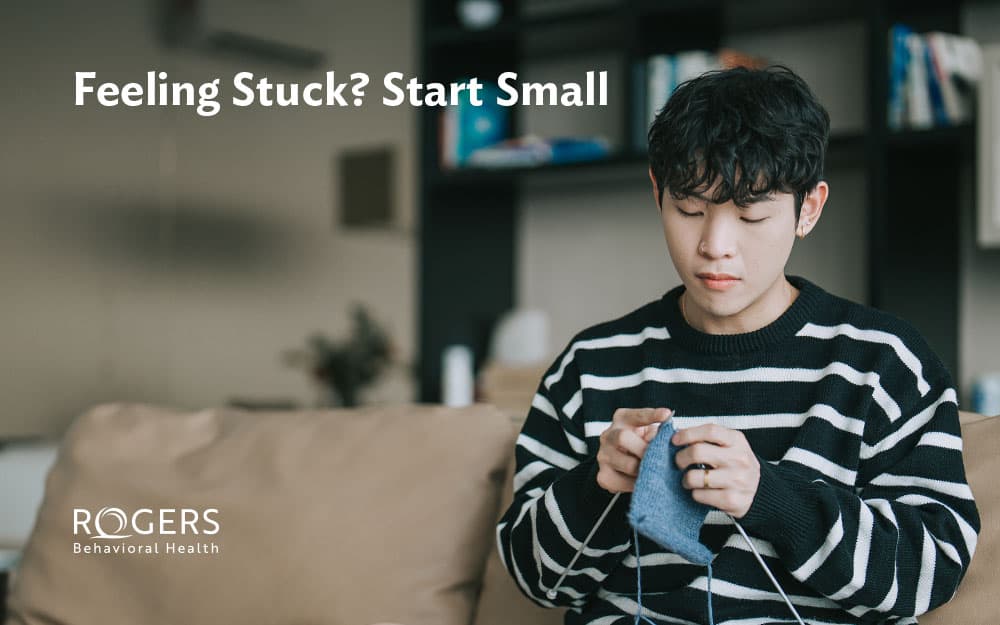
Sometimes, thinking small can help when you’re dealing with something big, like your mental health. When you’re struggling, it’s easy to let things slide, like showering, talking with a friend, or washing the dishes. Yet, it’s doing those little, everyday actions that make the biggest difference over time.
Rogers Behavioral Health’s Dr. Peggy Scallon, MD, DFAPA, DFAACAP, psychiatrist, explains how small actions make an impact and why it’s better not to wait until you feel better to begin.
Why is it important to do small actions for our mental health?
Oftentimes, we think we need to feel like doing something before doing it. But changing how we feel is hard. Instead, it’s easier to act first and let our feelings follow.
That approach in mental health treatment is called behavioral activation. The idea is by changing our behaviors to better support our mental health, we can then shift our thoughts and emotions. It’s especially effective for people dealing with depression. You don’t wait to get “undepressed.” You create a series of daily practices to help you feel better and “REV” your engine. A simple way to think about this is to focus on three types of everyday activities:
Routine activities
These are the basics, such as showering, brushing your teeth, eating, sleeping, and keeping your space somewhat organized. Maintaining a routine and managing healthy rhythms helps us feel better, meet our goals, and keeps us accountable to ourselves and others.
Enjoyable activities
These are fun things, such as listening to music, exercising, attending sporting events, spending time outside, moving your body, or doing a hobby. Even short moments like these can lift your mood.
Valued activities
We assign importance to these activities, although we may not necessarily enjoy doing them in the moment. Examples include finishing a task, going to work or school, or following through on something you said you’d do. They boost our self-esteem by helping us feel responsible, confident, and capable.
What happens when you stop taking action?
When you stop taking action, it affects your mental health. For example, a child not going to school may feel better in the moment by not getting on the school bus. But by the end of the day, they tend to feel worse about themselves. They may feel guilty about letting their parents down and disappointing their teachers and friends. They can be anxious about falling behind and worry that they’re not going to achieve their goals.
The same is true for everyone. When we stop doing things and have fewer enjoyable activities to look forward to, we start to feel off balance. Our sleep, nutrition, and physical activity may suffer. Our surroundings can also become cluttered and disorganized.
Why do mental health challenges make daily activities harder?
When someone is dealing with a mental health challenge, like depression, they’re discouraged and have less energy. Sometimes, it can feel like the spark is gone. Negative or anxious thoughts start to feel very heavy, and all this can make it harder to stay motivated.
One thing we commonly see with kids who come here is that their parents treat depression like any other illness and they drop expectations. They don’t ask their kids to do things anymore. But as kids aren’t held accountable for going to school and completing their homework and chores, they start to spiral downward. It’s hard to motivate people when they’re depressed. But we know that if we can get over the hump and initiate activity, we tend to feel better.
What matters is willingness, or being open to trying, even if it feels hard.
How does screen time impact daily activity and mental health?
We know that increased screen time costs us opportunities. When we’re scrolling, there’s a long list of things that we’re not doing, such as achieving our goals for work or school, getting physical activity, being outside in the sunshine, doing something that we find meaningful, or connecting with other people.
It takes initiative to engage in a goal-directed activity. It’s much easier to scroll because it doesn’t require a big commitment. But before we know it, a lot of time can pass. We can feel more discouraged, especially if we start comparing ourselves to what we see online.
How can I get started if I don’t feel motivated?
If you don’t feel motivated, I recommend:
1. Get curious. If you sense unwillingness, anxiety, or resistance, ask, “What is that?” “Why do I feel that way?” It’s important to identify and name what’s going on instead of numbing out using screens and being unaware of what’s causing avoidance.
2. Start small. Doing the next small thing right in front of you builds momentum. Does taking a shower change your entire outlook on life? No. But it’s better than not doing it. Then you do the next thing, brush your teeth. And that’s better than if you hadn’t done it. Then put on clean clothes. Before you know it, you have a whole series of micro mood improvements that help you feel a little bit better, achieve a goal, or hold you accountable to someone.
3. Focus on your daily actions, not how you feel. We usually say that mood is the last thing to improve. Sometimes, it can be beneficial to set that aside and instead focus on how you function, or your daily activities. Over time, that can help improve your mood.
How does mental health treatment help?
At Rogers, we use cognitive behavioral therapy which focuses on the relationship between our thoughts, emotions, and behaviors. You can’t tell someone to change their mood or snap out of it. But you can say, let’s work on taking a shower every day before 10 am. With willingness, it becomes an achievable goal.
While it’s more difficult to change our thoughts, it is possible. Thought patterns can become something like grooves in our brains. But with awareness and coping skills, they can shift over time.
I love residential care for teens because we spend a lot of time with them, and we see dramatic changes. They come here disengaged from life and discouraged. They’re irritable because they’re letting people down. One of the most powerful things that we do here is hold them to a schedule. It’s amazing how much they improve. You can see it in their expressions, postures, and the way they carry themselves. It’s fantastic, and it gives meaning to what we do.
Rogers offers mental health treatment
When you feel stuck, taking that first step can feel overwhelming. But reaching out can be the start of real change.
For a free, confidential screening, call 833-308-5887.
Small actions create structure, build confidence, and help people stay engaged in daily life. Consistent habits can lead to gradual improvements in mood and daily functioning.
Helpful activities include routine tasks like showering and sleeping regularly, enjoyable activities like hobbies and exercise, and valued activities like attending school, working, or completing responsibilities.
Depression and other mental health conditions can reduce energy, increase negative thinking, and make even simple tasks feel overwhelming, which can lead to avoidance and inactivity.
Start with one small, manageable task. Focusing on simple actions rather than waiting to feel motivated can help build momentum and create small improvements throughout the day.
Yes. Treatments such as cognitive behavioral therapy (CBT) can help people identify unhelpful thought patterns, build healthy routines, and develop skills that support long-term recovery.
