
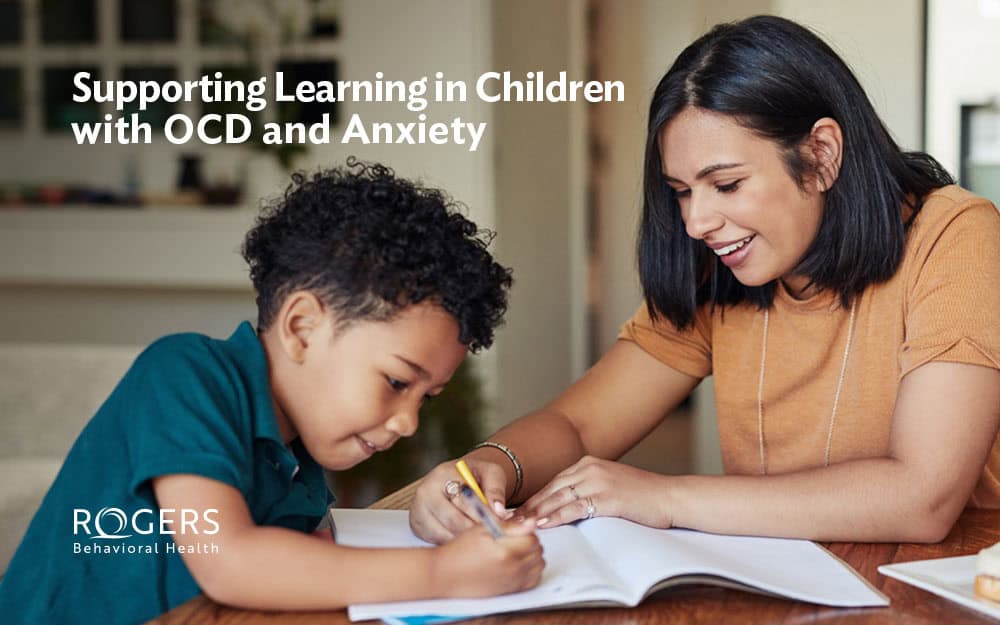
School and homework can be especially challenging for children with OCD or anxiety, not to mention stressful for parents, too.
Rogers Behavioral Health’s Mary Carncross and Amanda Rosenberg, licensed teachers, and Dr. Amanda Heins, PsyD, supervising psychologist, OCD and Anxiety residential care for adolescents, share how struggles can show up in the classroom and at home and how you can respond with empathy and support.
How can OCD and anxiety show up in the classroom?
OCD and anxiety can look like a lot of different things at school, including:
- Getting up frequently
- Appearing “spaced out” and distracted
- Tapping on the desk
- Making noises
- Avoiding or using a barrier to touch doors, computers, pencils, etc.
- Rereading or redoing work
- Positioning items in a symmetrical way
- Seeking reassurance
- Striving for perfection
- Avoiding turning assignments in or taking an excessive amount of time to complete them
As symptoms of anxiety and OCD intensify, the urge to avoid can increase and lead some students to refuse to attend school.
What can OCD and anxiety look like during homework time at home?
Many of the same behaviors seen at school can happen at home, such as avoiding homework or spending excessive amounts of time on assignments to ensure they are “perfect.”
What strategies can parents use at home to create a supportive environment?
The homework environment is really important. At the OCD and Anxiety Center, we ensure it’s quiet and calm.
Ten recommendations for parents include:
1. Have a designated space
2. Work with your child to create clear and attainable goals by asking questions such as, “What are you going to complete in this time?”
3. Help your child break down assignments into manageable chunks to boost confidence and chances of success
4. Have supplies handy
5. Include favorite pens or fidgets if they help
6. Try using headphones to block out distractions
7. Allow your child to work for a set amount of time then take a break (a timer can be helpful)
8. Offer a snack if it’s been a while since lunch
9. Make sure your child stays hydrated
10. Use a coping card (if they have one from their treatment) or visual reminder of what your child can do when they feel anxious or overwhelmed by OCD
Additionally, talk with your child about creating a game plan of what they’re going to do if OCD or anxiety tries to get in the way. For example, if OCD is trying to say, “That wasn’t good enough,” practice with your child what they could say in response.
We want parents to know that creating a calmer homework environment doesn’t mean accommodating or giving in to their child’s OCD or anxiety. Instead, parents are supporting their child in learning to prioritize their own needs rather than the demands of anxiety or OCD. A structured environment helps the child take charge of themselves, rather than letting their mental health challenges take control.
How can parents explain their child’s mental health needs to the teacher in a clear, respectful manner?
It’s important for parents to keep in mind that educators are not mental health experts, but they can be valuable partners in your child’s learning and well-being.
Consider these steps to foster understanding and teamwork.
1. It can be helpful to provide your child’s teacher(s) with some context. Share what’s going on, behaviors they might see, and how they can respond in ways that are helpful and supportive. Approach the conversation with an attitude of collaboration and wanting to keep an open door of communication. It’s very difficult for teachers to know what to do if parents aren’t working with them.
2. As parents talk with educators about their child’s mental health, it’s important to ask them for signs they would recommend an evaluation for a 504 plan or Individualized Education Plan (IEP). Both are designed to support students with unique challenges and include educational goals and accommodations to help them thrive in an academic setting.
3. There could come a time when involving your child’s mental health provider might be helpful in providing resources and education.
4. Collaborate with your child. They know firsthand what aspects of the school day become stressful due to OCD/anxiety and should be involved in creating a plan to help them manage their challenges at school.
What are self-care strategies for a parent when homework or school is a daily battle?
When children are struggling with their mental health, all the attention naturally goes to the child, and parents can easily lose sight of their own well-being. It is important to remember that taking care of yourself isn’t selfish — it’s essential and powerful modeling for your child to see.
Here are a few suggestions:
- Do the basics, such as getting enough sleep, exercising, limiting alcohol, and eating balanced meals.
- Give yourself grace. Self-compassion is critical!
- Let go of the guilt. No one is to blame for your child’s mental health struggle.
- Practice Mindfulness helps bring us to the present moment and tune out the “what-if” worries parents often experience when their child is struggling.
- Consider seeking mental health support for your child, particularly someone with expertise in OCD/anxiety. Partnering with your child’s provider will be essential as they will help families reduce accommodating symptoms within the home.
- Consider seeking your own mental health support.
Additionally, think about creating fun for you and your child. If there’s a difficult moment during homework, take a break and watch a funny video or go for a walk together. Be sure to celebrate any movement in the right direction.
What encouragement do you have for parents?
The biggest encouragement for parents when they’re thinking about how to manage anxiety, OCD, and education is to embrace a growth mindset. It’s okay to acknowledge when things are hard while also trying to maximize the learning moment. If your child experiences distress, it doesn’t mean you failed or that all the progress is gone. Pause and reflect on what happened without judgment, then make any needed adjustments, and keep moving forward!
Rogers offers OCD and anxiety treatment
OCD and anxiety don’t define you. With the right treatment, you can learn to manage your symptoms and live a full and connected life. We treat children, teens, and adults, providing compassionate and effective care.
Call 833-308-5887 for a free confidential screening.
Children with OCD or anxiety may seem distracted, ask for reassurance often, redo work repeatedly, or avoid certain tasks. Some may take a long time to complete assignments or struggle to turn them in at all.
Focus on structure and support rather than perfection. Set clear time limits, break assignments into smaller steps, and encourage effort instead of “perfect” results. This helps your child build confidence without reinforcing anxiety.
Support means helping your child face challenges in manageable ways, not removing them. Encourage small steps forward, stick to routines, and focus on progress rather than eliminating discomfort.
Keep the conversation simple and collaborative. Share what your child is experiencing, what behaviors the teacher might notice, and what responses are most helpful. Working together creates a stronger support system.
