
As summer slowly fades to fall, change is in the air, for children and parents. New schedules and pressures can feel overwhelming, but this season also offers the chance to build resilience.
Rogers Behavioral Health’s Dr. Patrick Michaels, PhD, psychologist and regional clinical director, looks at the emotional challenges of back-to-school for our series, School Smarts for Fresh Starts, and how parents taking care of their own mental health can set the tone for the entire family.
Why can the start of a new school year feel overwhelming?
The transition back to school can bring different challenges for students and parents.
Students may feel some anxiety about going back into the classroom, whether that stems from being with a bunch of new students or seeing friends they haven’t been with in a while. A lot changes when kids move from elementary to middle school, or middle school to high school. Even starting a new sports team can stir up nerves and uncertainty. There are many reasons children may have difficulty readjusting.
Parents are also adjusting to new routines and demands, like waking up kids, getting younger ones dressed and to the bus stop or driving them to school on the way to work, helping with homework, and juggling practices and school events, all while managing their own responsibilities.
Why is resilience important for stressed out parents?
Resilience is important for parents because it sets the tone. It’s largely about balance and trying to figure out how to accomplish multiple, sometimes competing, priorities among children.
One of my favorite authors, Dr. Becky Kennedy, PhD, encourages parents to do their own emotional work and to really think about being the leader in the home, modeling healthy boundaries and self-care.
How do I cope with parenting stress in a healthy way during the school year?
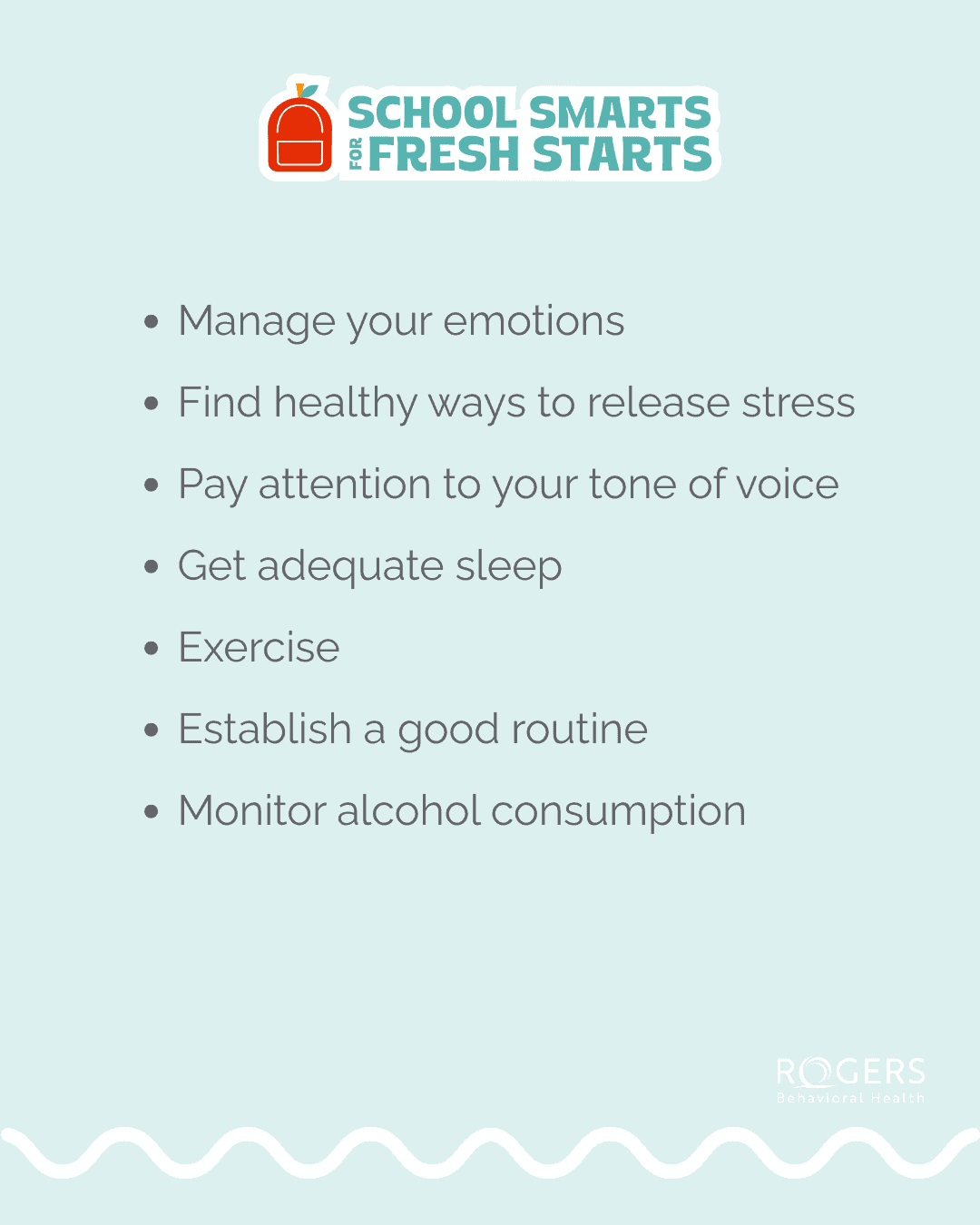
I think one of the biggest things parents can do is to try to work on managing their own emotions and expectations. Being aware of how you’re feeling and finding healthy ways to handle stress can make a big difference. I recommend paying attention to your tone of voice when interacting with your children. They pick up on stress and frustration and may reflect those feelings back to you. Managing your emotions helps create a calmer, more supportive environment for everyone.
It’s important for parents to:
- Get adequate sleep
- Exercise
- Establish a good routine
- Monitor alcohol consumption
A lot of times kids don’t listen to what we say as much as they watch what we do.
What are signs a parent may be experiencing emotional overload?
Parents certainly have their own feelings and frustrations, too.
Here are seven warning signs that stress may be building:
- Disconnection: Nodding along as a child talks but feeling uninterested or emotionally distant.
- Going through the motions: Doing what needs to be done but it feels empty.
- Loss of joy or meaning: Activities or routines that once felt rewarding now feel dull or draining, like engaging with one’s children.
- Changes in daily functioning: Difficulty keeping up with responsibilities at work or maintaining social connections.
- Ruminating thoughts: Repetitive, intrusive thoughts that are hard to shut off.
- Isolation: Pulling away from others or spending excessive time on screens.
- Loneliness: Feeling alone even when people are in the same room.
Why should parents embrace a growth mindset during the school year?
It’s helpful for parents to remember that we’re all under development. Each one of us, children included, is a work in progress. We’re constantly learning and developing. As Dr. Becky Kennedy says, even when children are experiencing difficulty, they’re good inside. When parents embrace that and model a willingness to grow, it shows kids that it’s okay to not have it all figured out. That tenderness, gentleness, and compassion can allow us to see that we’re all trying to do the best we can with what we have. When we approach ourselves and each other with that kind of grace, our relationships become stronger and more meaningful.
Rogers provides mental health treatment
If you’re struggling with your mental health, there is hope. We can help you live a life with purpose and meaning.
Call 833-308-5887 for a free, confidential screening.
Part of our back-to-school series, School Smarts for Fresh Starts
Looking for more back-to-school tips? Click here for additional resources from our experts.