
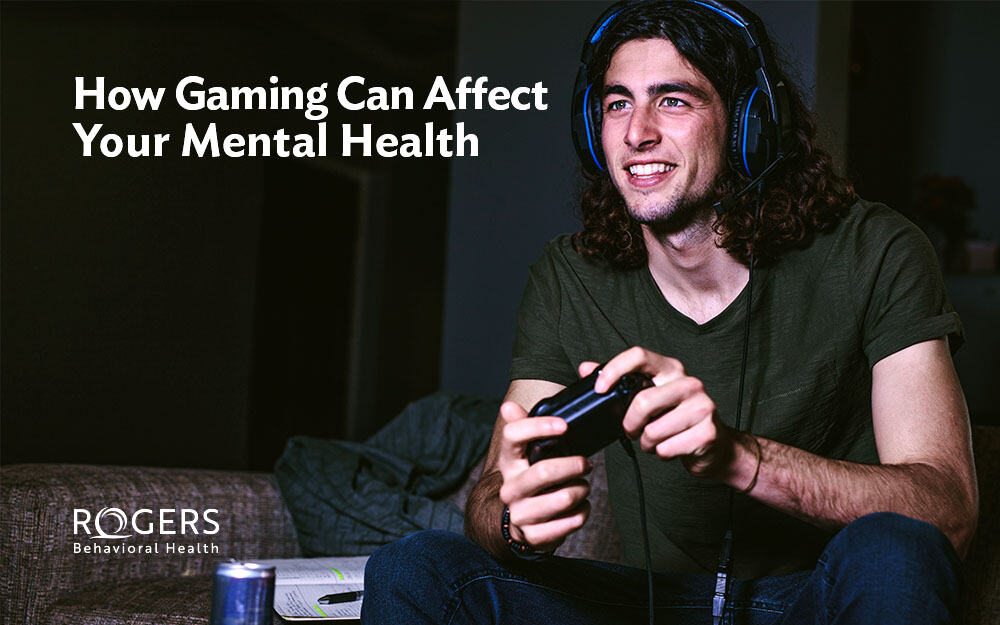
Minecraft. Fortnite. Super Mario Bros. Video games like these are daily entertainment for kids and adults alike. But how much gaming is too much for a person’s mental health?
Rogers Behavioral Health’s Dr. Gene Yang, MD, MBA, FAPA, psychiatrist and medical director of clinical informatics, shares how video games can benefit mental health and offers four practical strategies to maintain your well-being.
What are the benefits of video games for a person’s mental health?
A lot depends on the context. For most activities, doing too much of anything in lieu of doing more important or necessary things is definitely not good for you. On balance, video games can benefit a person’s mental health in several ways:
Social connections: Many modern video games offer social connections, which can lead to lasting friendships. People meet their future spouses online while playing video games. There are entire cultures dedicated to video games that meet up in person. It’s a shared interest, similar to a bowling club.
Different perspectives: Certain games allow players to experience someone else’s life story, such as navigating illness, or exploring identity in a more in-depth way than a movie or a book. These interactive experiences provide insight into perspectives players might not otherwise encounter.
Stress relief: Video games can provide a mental break during stressful times and the chance to relax and recharge emotionally.
Physical benefits: Action video games have evidence for improving some aspects of hand-eye coordination and reaction times, with benefits for daily activities such as driving. Video games are often used for certain types of physical rehabilitation as well. Other video game types that include full body movements, usually associated with virtual reality systems, can allow for entertaining ways of exercising.
How can playing video games negatively impact a person’s mental health?
There are several ways playing video games can negatively impact a person’s mental health if not managed properly:
Risk of playing excessively: I like to define video games as expertly created cognitive manipulators. What I mean by that is they’re designed to be habit-forming. They give incremental rewards which make you want to keep playing, sometimes at the expense of everything else. For example, in a game like Mario, each time a player hits a new platform or jumps over an enemy, they’ve achieved a small incremental goal. That also provides a neurological “reward,” while the long-term goal, such as completing a level, is still far away. This combination can make it hard to step away from the game, even when you need to do something else.
Harm to relationships: While playing can have the positive effect of developing some social relationships, because of the addictive component, there’s a risk of negatively impacting your relationships. I often recommend treating a video game like going out to see friends: setting aside a defined amount of time and letting others in your life know of your plans.
Can lead to isolation: While many video games involve teamwork, some do not. Not engaging with other people can lead to isolation, which can then encourage more gaming, creating a cycle.
What are signs that gaming may be affecting physical and/or mental health?
What I tell my patients is that if people start talking to you about how much you play because it’s bugging them, you need to listen and consider their concerns.
Other possible signs that video gaming may be impacting your mental health include:
- Failure to complete work or school responsibilities
- Changes in personal hygiene
- Disrupted or inadequate sleep
- Withdrawal from usual activities
- Changes in eating habits, such as eating more junk food while gaming, skipping meals, or eating less overall
- Friends or family stopping invitations because you usually decline to play video games
- Not completing daily tasks or routines
- Only thinking about the next time that you can play
While video game addiction is not a recognized mental health diagnosis, studies have shown significant similarities to recognized diagnoses, specifically gambling and substance use disorders.
What strategies can I use to manage my mental health while still enjoying video games?
Here are four ways to protect your mental health while continuing to play:
1. Schedule your gaming: I think this is the most important thing to do, especially when you consider all the tasks and responsibilities you have on a daily basis. Just like you would need to get your homework done before going out with your friends, schedule time to play after or in between doing other necessary things.
2. Set a timer: Video games are designed to capture your attention and keep Treat it like any other activity that has a planned stopping point. Give yourself a certain amount of time to play. When the alert goes off, stop.
3. Communicate how long you’re going to play: Let others know how long you’re going to play. As mentioned earlier, this often impacts romantic relationships, since modern video games are quite immersive – the player is essentially not mentally present at home, even if they’re physically there. This can be very frustrating for other family members, so it often helps to treat it like going out with friends: defined length of time, giving your family a heads up that you will be unavailable, and limiting the total number of hours. For example, I’ll tell my wife that I’m going to play three rounds of Marvel Rivals. That way, she knows I’m essentially in a different world for the next hour, but once it’s over, I’m back.
4. Teach others! Video games require significant skill to begin, and the learning curve is often very steep. Things that seem obvious to a regular video game player will not be obvious to someone who is playing for the first time. Be patient and enjoy the process of introducing someone to an activity you enjoy!
Video games and anxiety
Many people who struggle with mental health concerns find video games to be really cathartic because they’re highly distracting and enjoyable. However, avoidance isn’t always helpful.
For example, if you play a video game every time you think about an issue that causes you anxiety, it doesn’t mean that concern goes away. You’re just kicking it down the road. I don’t like to use video games purely as a distraction. We need to be able to tolerate all our thoughts, even the difficult ones. Video games should be an added source of enjoyment, not an escape for distressing feelings or the only source of fun in your life.
Rogers offers mental health treatment
Mental health challenges can start small but quickly become overwhelming. When you’re ready for support, we’ll be here to listen, understand, and guide you with compassionate care and over a century of experience.
Rogers provides therapy for anxiety, addiction, depression, OCD, and more. Call 833-308-5887 for a free, confidential screening.
Yes. Video games can provide stress relief, social connection, and opportunities to experience different perspectives. Some games may also help improve skills such as hand-eye coordination and reaction time.
Signs of excessive gaming may include neglecting work, school, or daily responsibilities; changes in sleep, eating habits, or personal hygiene; withdrawing from activities you once enjoyed; or constantly thinking about when you can play next.
Yes. While gaming can help people build friendships and connect with others, excessive gaming can strain relationships if it takes priority over spending time with family, friends, or partners.
Scheduling gaming time, setting a timer, and communicating your plans with others can help create healthy boundaries and prevent gaming from interfering with other parts of life.
Video games can provide temporary stress relief and a mental break. However, if gaming becomes your primary way of avoiding difficult thoughts or feelings, it may prevent you from addressing underlying concerns.
Video game addiction is not currently recognized as a formal mental health diagnosis. However, research has found similarities between problematic gaming behaviors and conditions such as gambling and substance use disorders.
