

We often associate routines with young children—bedtime stories, bath time, and snack schedules—but teenagers benefit just as much from consistent daily routines.
As part of our School Smarts for Fresh Starts series, Meg Troestler, LPC, clinical supervisor at Rogers Behavioral Health Silver Lake Outpatient Center in Oconomowoc, shares common roadblocks and six important aspects of a successful routine.
Why are routines important for mental health in teens?
Adolescents face big emotional, physical, and mental changes, and a routine offers something they can rely on. It brings predictability to their day, which can reduce stress and support their mental health.
Research backs this up. Routines have been linked to lower levels of anxiety and depression in teens, especially when they include enough sleep, regular meals, physical activity, and downtime. Routine also strengthens executive functioning: the brain’s ability to plan, manage time, and stay organized, which is still developing in adolescence.
What makes a successful routine?
A great routine doesn’t need to be strict. It just needs to be consistent. Here are six important parts of a teens’ routine:
- Sleep: Teens need eight to 10 hours per night, although most fall short.
- Meals: Regular, balanced meals help keep energy and mood stable.
- Movement: Physical activity reduces stress and supports mental health.
- Screen-free time: Avoiding screens 30 to 60 minutes before bed promotes sleep quality.
- Study time: Ideally, schedule time for studying at the same time each day to build focus.
- Family time: Even short check-ins or shared meals matter.
What are common routine roadblocks?
Life gets busy, especially during the school year. You may find these common barriers to keeping a routine:
- Overscheduling: Sports, clubs, and homework can crowd out downtime and sleep.
- Technology distractions: Phones and social media can eat up hours if left unchecked or monitored.
- Inconsistent expectations: If parents aren’t in agreement, routines fall apart quickly.
- Teen pushback: Adolescents may resist anything that feels controlling or childish.
You don’t need to eliminate every challenge; just recognize and plan around them.
How can I create a routine that works for everyone?
Back-to-school season is the perfect time to reassess routines. Rather than dictating a schedule, involve your teens in creating one. Ask them what’s working and what’s not.
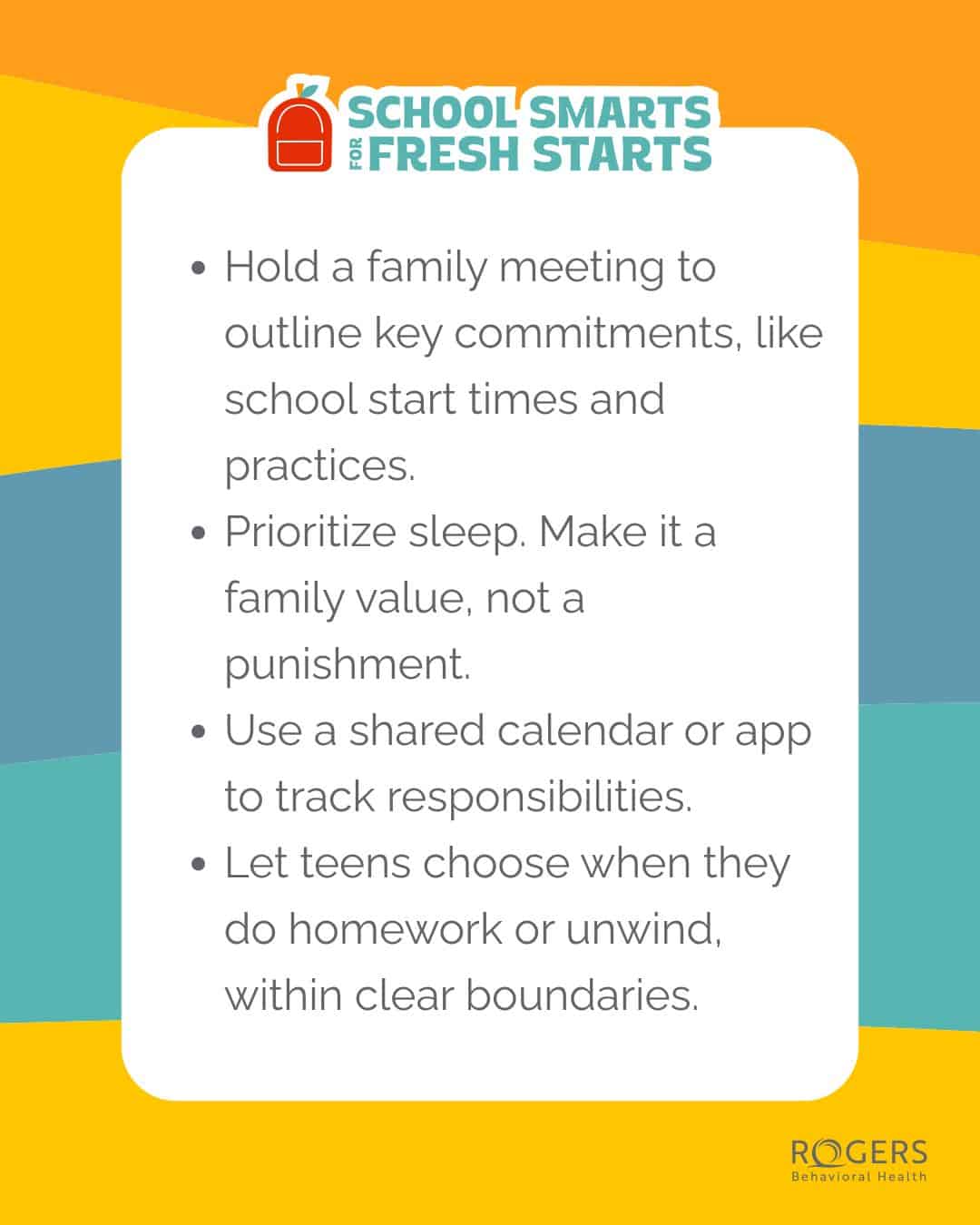
Here are some guiding points to try:
- Hold a family meeting to outline key commitments, like school start times and practices.
- Prioritize sleep. Make it a family value, not a punishment.
- Use a shared calendar or app to track responsibilities.
- Let teens choose when they do homework or unwind, within clear boundaries.
How can parents provide support without being controlling?
Supporting routines doesn’t mean micromanaging. Instead of nagging, ask open-ended questions such as, “When do you want to start homework tonight?” Give choices where you can, like how they wind down at night, while keeping certain expectations firm, such as no phones at bedtime.
Most importantly, model the behavior. If you want them to unplug, do the same.
Routines aren’t about control, they’re about care. They help teens feel safe, supported, and more in control of their busy lives.
Mental health resources for teens
At Rogers, we combine trusted, proven care with compassion to support teens struggling with anxiety, depression or other mood disorders, eating disorders, emotional dysregulation, OCD, and/or trauma. We can help your teen get back to the life they want to live.
For a free, confidential screening, call 833-308-5887.
Part of our back-to-school series, School Smarts for Fresh Starts
Looking for more back-to-school tips? Click here for additional resources from our experts.