
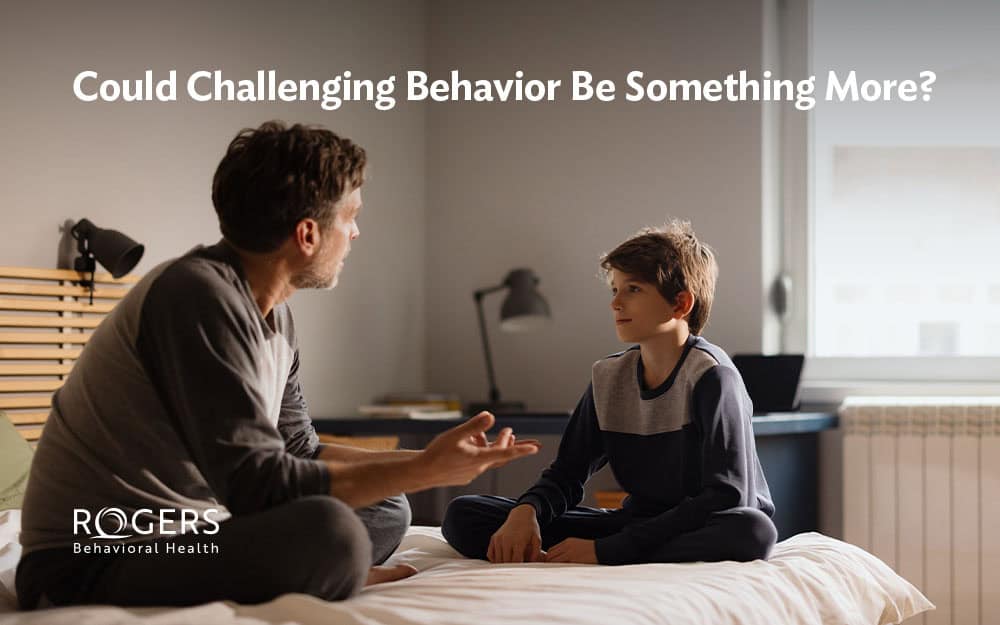
If you’ve ever cared for a child or teenager, you know that pushing boundaries is part of growing up. From toddler tantrums to teenage eye-rolls, testing limits is a normal, and often healthy, part of development. But what happens when defiance becomes more frequent, more intense, and begins to disrupt daily life?
Rogers Behavioral Health’s Rachel Nelsen, LMHC, NCC, MCAP, CEDS, CCTP, therapist at Rogers in Tampa, shares common signs of oppositional defiant disorder and how mental health treatment can help.
What is oppositional defiant disorder?
Oppositional defiant disorder (ODD) is a childhood mental health condition characterized by an ongoing pattern of:
- Anger and irritability
- Argumentative or defiant behavior
- Vindictiveness
To be diagnosed with ODD, these behaviors must last at least six months and occur with individuals outside of siblings, such as parents, teachers, or other authority figures.
It’s important to note that all children act out occasionally. What sets ODD apart is the consistency, intensity, and impact of the behavior.
How does ODD compare to typical childhood defiance?
Understanding the difference between typical child defiance behavior and ODD can be challenging.
Typical developmental behavior might include:
- Occasional tantrums or arguing
- Saying “no” or talking back
- Testing limits during specific stages, like toddlerhood or adolescence
- Behavior that improves with consistent boundaries and support
ODD, on the other hand, looks like:
- Frequent and persistent challenging behavior across settings, such as home, classroom, extracurricular activities?
- Intense emotional reactions such as explosive anger
- Ongoing conflict with authority figures
- Behavior that interferes with relationships, school, or daily functioning
While most kids push boundaries sometimes, children with ODD struggle to regularly control their behavior.
What are common signs and symptoms of oppositional defiant disorder?
Children and teens with ODD may show a mix of emotional and behavioral symptoms.
Emotional signs:
- Frequent irritability or anger
- Easily annoyed
- Resentful or easily frustrated
Behavioral signs:
- Arguing with adults or authority figures
- Refusing to follow rules
- Deliberately annoying others
- Blaming others for mistakes
- Frequent temper outbursts
- Spiteful or vindictive behavior
When does ODD begin?
ODD typically begins in early childhood, often becoming noticeable during the preschool or early school years. While it can show up in adolescence, earlier onset is more common.
Because defiance is developmentally normal at certain ages, like 2 to 3 years old or during the teen years, the key difference is whether the behavior is more severe and persistent than expected.
What causes oppositional defiant disorder?
There isn’t a single cause of ODD. Instead, it tends to develop from a combination of factors:
Biological factors: Temperament, sensitivity to stress
Psychological factors: Difficulty managing emotions
Environmental factors: Inconsistent discipline, family conflict, or stressful life experiences
ODD is best understood as a mismatch between a child’s emotional needs and their coping skills, often shaped by their environment. In many cases, their emotional needs are bigger than their ability to cope, creating a gap between the two.
Can someone with ODD have other mental health challenges?
Yes, many children with ODD also experience other mental health challenges. The majority have at least one additional diagnosis, such as:
- ADHD
- Anxiety disorders, including OCD
- Depression or other mood disorders
- Learning differences
- Impulse control disorders
These overlapping conditions can make ODD more complex and are important to address in treatment.
How does ODD affect daily life?
Oppositional defiant disorder doesn’t just affect behavior. It impacts relationships and daily functioning across multiple areas.
At home:
- Frequent arguments with caregivers
- Escalating power struggles
- Strained family relationships
At school:
- Difficulty following rules
- Conflict with teachers
- Disruptions that affect learning
Socially:
- Trouble maintaining friendships
- Increased peer conflict
- Challenges with authority figures
When should you seek help?
It may be time to consider professional support if:
- The behavior lasts longer than six months
- It significantly interferes with home, school, or social life
- Family conflict is escalating
- The child’s behavior feels difficult to manage despite consistent efforts
Many families seek help when defiance begins to impact the entire household dynamic. That can look like extreme verbal or even physical arguments between parents and the child with ODD. Siblings feel the effect of the tensions and needing to walk on eggshells.
How can mental health treatment help?
The good news is that ODD is highly treatable, especially with early intervention.
Effective treatment often includes:
Parent management training: helps caregivers respond consistently and reduce power struggles
Individual therapy: builds emotional regulation and coping skills
Family therapy: improves communication and relationships
School support: creates consistency across environments
Oppositional behavior can be frustrating, exhausting, and at times overwhelming, but it’s also a signal of something deeper. Children with ODD are often struggling to manage their emotions and unmet needs, not simply choosing to misbehave.
Recognizing the difference between typical defiance and a more persistent pattern is the first step toward meaningful support.
In working with kids and teens with ODD, I often find that they’re overwhelmed with strong emotional responses. But when the right coping skills are provided along with consistent structure, expectations, and both positive and negative consequences, they can learn to manage their emotions more effectively, reduce conflict with others, build healthier relationships and lead very meaningful and productive lives.
Rogers offers mental health treatment
If you have a child struggling with a mental health challenge, we know how difficult that can be for you and the entire family. We want to help.
It takes courage to take that first step. Hope and healing are here when you’re ready.
Call 833-308-5887 for a free, confidential screening.
Oppositional defiant disorder (ODD) is a childhood mental health condition marked by an ongoing pattern of anger, irritability, argumentative behavior, and defiance toward parents, teachers, or other authority figures. To be diagnosed, these behaviors must last at least six months and significantly affect daily life.
Most children test boundaries occasionally as part of normal development. ODD involves more frequent, intense, and persistent challenging behavior that occurs across settings and interferes with relationships, school, or daily functioning.
There isn’t one single cause of ODD. It typically develops from a combination of biological, psychological, and environmental factors that affect a child’s ability to manage emotions and cope with challenges.
Treatment often includes parent management training, individual therapy, family therapy, and school-based support. With early intervention and consistent care, children can build coping skills, improve emotional regulation, and strengthen relationships.
Parents should consider seeking professional support if challenging behavior lasts longer than six months, disrupts home or school life, causes ongoing family conflict, or doesn’t improve despite consistent parenting strategies.
