
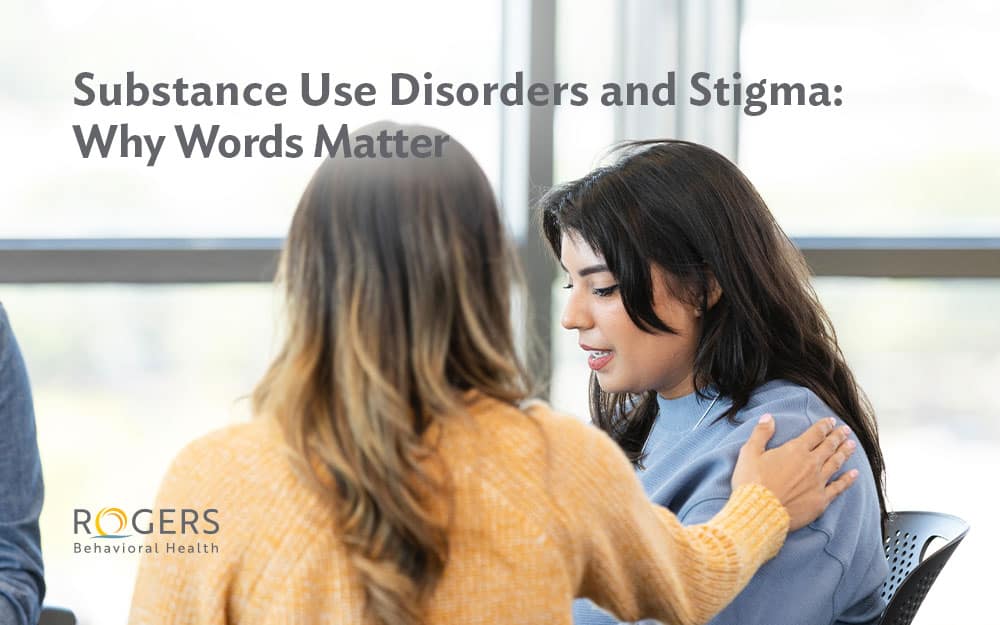
Substance use disorders are often misunderstood. The stigma surrounding them often makes it even harder for people to seek help.
Brittney Fair, MSW, LCSW, training lead with Rogers Community Learning and Engagement and WISE and therapist, shares how challenging misconceptions and using person-first language can create more compassionate conversations and support recovery.
How do you define stigma as it relates to substance use?
When you break it down to its simplest form, stigma is the judgment that we place on people we see as different from ourselves. Stigma has several layers: Stereotypes, prejudice, and discrimination.
Stereotypes
Stereotypes are our ideas about people. An example is people with substance use disorders look and behave a certain way.
Prejudice
Prejudice is the next layer of stigma and involves our beliefs. An example is how we believe people with substance us disorders think and feel.
Discrimination
Discrimination is putting our ideas and beliefs into action. An example is refusing to hire someone with a substance use disorder or allowing them to live in housing you’re renting.
What does stigma look like in everyday life?
Stigma can look like rolling your eyes when hearing about someone who is struggling or hesitating in your interactions with them. We always need to remember that people with challenges are first and foremost people. And while what they struggle with may look different than what you struggle with, they’re human beings just like you.
What is the impact of stigma?
More often than not, people with substance use disorders are treated as less than. They’re often portrayed in movies, television, and social media as people who can’t be helped or don’t want help. These harmful stereotypes can lead to shame, isolation, and feelings of not being good enough. For some people, that stigma becomes another barrier to recovery. They may begin to believe the negative messages and wonder, “Why even try?” That mindset can keep someone stuck in the cycle of substance use longer.
What are some of the most common misconceptions about people with substance use disorders?
Three common misconceptions are:
Misconception #1: It only happen to a certain type of person.
Fact: The truth is that these disorders can affect anyone. No one is immune to this challenge.
Misconception #2: It is simply a choice.
Fact: These disorders develop for many reasons, and no one chooses to have one.
Misconception #3: People with this type of disorder need “tough love.”
Fact: That’s the complete opposite of how you want to show up and support someone who’s dealing with any challenge. They need support. They need a shoulder to cry on. They need to know that they’re not alone. They shouldn’t be made to feel ashamed or guilty.
What are respectful alternatives to words commonly used about substance use disorders?
Words matter because they have power. We want to use words that acknowledge the person first before the challenge, because each person is so much more than what they’re struggling with. Here are a few examples of language that can help reduce stigma.
| Instead of saying… | Consider using… |
| Alcoholic, addict, junkie, crackhead | A person with a substance use disorder |
| Sober | In recovery |
| Rock bottom | An individual at their lowest |
| Manipulative | Trying to get out of survival mode |
| Habit | Substance use disorder |
We often don’t think about how our choice of words can impact someone. For example, saying a person is in recovery communicates that they’re on a journey. It’s an ongoing process that may not be pretty, but they’re making changes and moving forward.
People also commonly say someone has “hit rock bottom” or needs to “hit rock bottom.” When you think of it, it’s quite negative and can feel hopeless, as though there’s nowhere left to go. Saying a person is at their lowest point acknowledges that they’re struggling while also leaving room for hope and the possibility of recovery. Being kind and respectful can make a big difference. You can wonder. “Why would I respect someone who has a substance use disorder?” The answer is simple: they’re a person first. Person-first language recognizes someone’s humanity instead of defining them by the challenges they’re facing.
What can family members and friends do to reduce stigma?
Two recommendations I have are:
1. Educate yourself. We often base what we know on what we read on social media or see on screens. But those messages are often shaped by stereotypes and stigma. If you believe everything society says, you’re going to unintentionally bring those stigmas into your interactions with the person who is struggling.
2. Practice self-awareness. Before supporting someone else, take a moment to check in with yourself. If you’re feeling overwhelmed by work or other stressors, you may not be in the best place to provide the support someone needs. That’s okay. Recognizing your own limits doesn’t mean you don’t care. It’s being mindful of how you show up for others. If today isn’t the right day, someone else may be able to step in. You can be there when you’re in a better place to be present.
What resources do you recommend?
I recommend the following resources:
- Alcoholics Anonymous
- Al-Anon for family members
- Rogers Behavioral Health
What is one takeaway you want people to have about stigma?
Recovery from substance use is a difficult journey. If you’re supporting someone, remember that being kind goes a long way. Don’t go into a situation assuming you know everything about a person’s experience. Take the time to get to know them and their story. That’s when real understanding and compassion can happen.
Rogers offers substance use treatment
At Rogers, we offer compassionate care with substance use treatment that works. One call can change everything.
For a free, confidential screening, call 833-308-5887.
Stigma is the judgment people place on those they see as different. It can include stereotypes, prejudice, and discrimination, making it harder for people with substance use disorders to seek help and recover.
Stigma can lead to shame, isolation, and feelings of hopelessness. It may also discourage people from seeking treatment or staying engaged in recovery.
Some common misconceptions are that substance use disorders only affect certain people, are simply a choice, or require “tough love.” In reality, substance use disorders can affect anyone, develop for many reasons, and recovery is best supported through compassion and understanding.
Person-first language recognizes that someone is more than their diagnosis. Saying “a person with a substance use disorder” instead of labels like “addict” or “alcoholic” helps reduce stigma and respects a person’s humanity.
Learning about substance use disorders from trusted sources, challenging stereotypes, practicing self-awareness, and approaching loved ones with empathy instead of judgment can help reduce stigma and support recovery.
