

Myth #1: People with OCD just like to be organized
One of the biggest misunderstandings is that people with OCD just like to be clean and organized. Many think having symptoms of OCD means liking things to be arranged in a specific way, such as lining up objects, organizing drawers, or being excessively tidy.
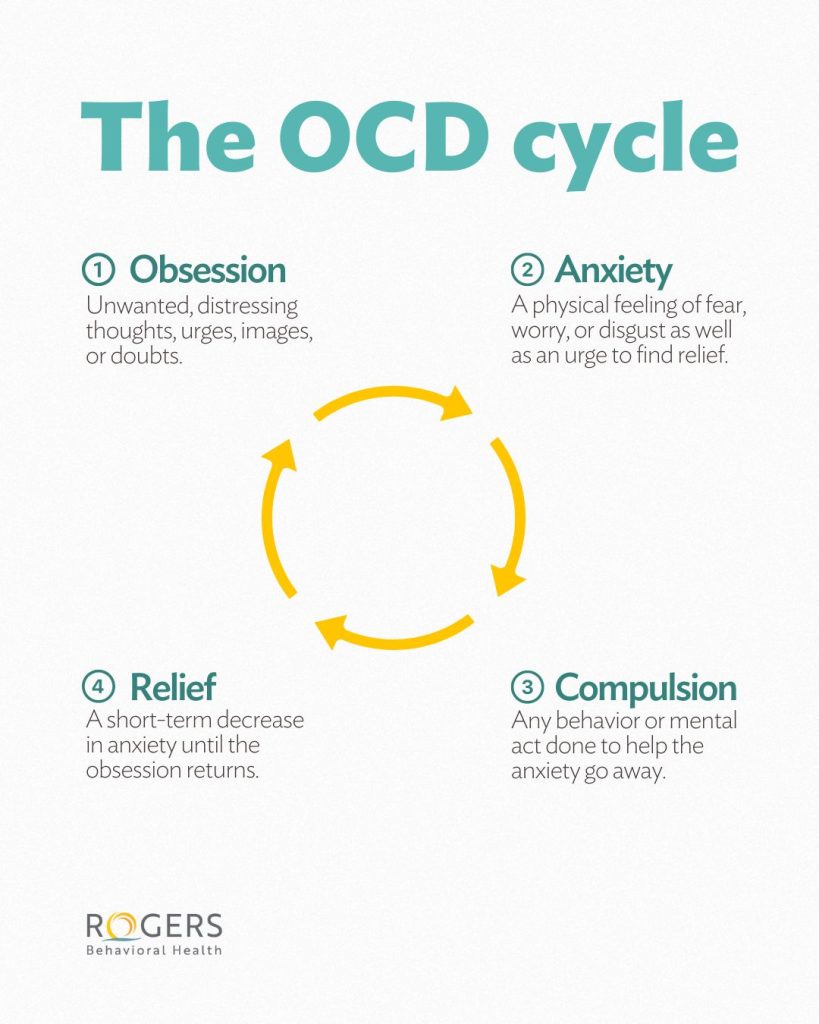
However, someone experiencing symptoms of OCD has intrusive thoughts (obsessions) that create significant anxiety or distress. To alleviate this anxiety, individuals feel compelled to perform behaviors or mental acts (compulsions).
For example, someone with OCD might repeatedly:
- Wash their hands
- Check locks
- Pray
- Seek reassurance
They may also do other compulsive behaviors to try and reduce the anxiety brought on by their obsessive thoughts.
Fact: These obsessions and compulsions are time-consuming and can interfere with daily life, making it much more than just a preference for organization or cleanliness.
Myth #2: Everyone with OCD has perfectionism
It’s important to note that not everyone with OCD is a perfectionist. While perfectionism can be a feature of OCD for some, many with OCD are driven by a need to reduce or eliminate fear or anxiety. The compulsions aren’t done to make something perfect, but to reduce the anxiety caused by intrusive thoughts.
For example, someone with OCD may repeatedly check whether the door is locked, not because they want it to be locked perfectly, but because they’re trying to ease the distressing thought that someone might break in and harm their family if the door is left unlocked.
Fact: OCD behaviors are about reducing anxiety rather than achieving perfection.
Myth #3: If you have enough willpower, you can get over OCD symptoms
There is a damaging belief that OCD can be “cured” through willpower, or that you can make the thoughts go away if you try hard enough. While people with OCD can make progress through treatment, the idea that if they were strong enough, they could just “will away” or ignore their intrusive thoughts and anxiety is untrue and harmful.
Effective treatment for OCD typically involves a combination of cognitive behavioral therapy (CBT), specifically exposure and response prevention (ERP). ERP involves gradually exposing individuals to their intrusive thoughts and helping them resist the accompanying rituals in a controlled environment.
Fact: With time and professional support, people with OCD can learn to manage their symptoms.
Myth #4: OCD is only about cleanliness or germs
While a fear of germs or contamination is common in OCD, the disorder can involve a wide range of obsessions and compulsions.
Obsessive thoughts can focus on fears of harm (to oneself or others), making mistakes, or fears about morality or the need for symmetry. The compulsions that follow can vary greatly. For instance, someone might repeatedly check if they’ve left an appliance on or seek reassurance from others about a past event.
Fact: OCD is not limited to a particular set of behaviors or thoughts. The content of the obsessions is unique as the individual, and rituals can take many forms, such as handwashing, counting, blinking, or checking.
Myth #5: OCD is uncommon and doesn’t affect many people
Contrary to the perception that OCD is uncommon, it impacts a significant portion of the population. According to the Anxiety and Depression Association of America (ADAA), OCD affects about 2.5 million adults, or 1.2% of the population.
Additionally, OCD can manifest in different ways, and its severity can vary widely. Some people experience mild symptoms that don’t interfere much with daily life, while others may experience severe obsessions and compulsions that make it difficult to maintain relationships, work, or engage in everyday activities.
Fact: Many people are living with OCD without realizing it.
Myth #6: People with OCD can control their intrusive thoughts
Another common myth is that people with OCD can easily control their thoughts. No one has full control over their thoughts! This misunderstanding ignores the fact that OCD is a mental health disorder that involves deeply ingrained, uncontrollable patterns of thought. People with OCD are often aware that their obsessions are irrational, but that doesn’t mean they can make them stop.
For example, an individual might have obsessive thoughts about contamination or harming others, even though they know these thoughts don’t reflect their true desires or intentions. Despite recognizing that their compulsions (such as washing hands repeatedly or checking locks) are not logically necessary, the anxiety generated by the obsessions makes it nearly impossible to resist performing the behaviors.
Fact: Treatment for OCD involves learning to respond to intrusive thoughts in a way that helps them become quieter and less frequent over time.
By challenging these common myths, we can start to see OCD for what it really is—a complex, challenging mental health condition. Understanding enables greater empathy and support for those who struggle with it, encouraging them to seek the proper treatment they need and deserve to improve their quality of life.
By the team at the OCD and Anxiety Center for adolescent residential care at Rogers Behavioral Health
Rogers offers OCD treatment
We understand that living with OCD can be difficult, and it can be hard to ask for help. When you’re ready, our compassionate experts are here to help children, adolescents, and adults manage symptoms and find ways to live full, connected lives.
To get started, call 833-308-5887 for a free, confidential screening.
