Menu Close

Recovery from Addiction is Possible

The observance of National Recovery Month, according to SAMHSA(Substance Abuse and Mental Health Services Administration), promotes the societal benefits of prevention, treatment, and recovery for mental and substance use disorders, celebrates people in recovery, lauds the contributions of treatment and service providers, and promotes the message that recovery in all its forms is possible.

Read More »

Eating Disorder Treatment Helps Patients Learn to Enjoy Meal Times

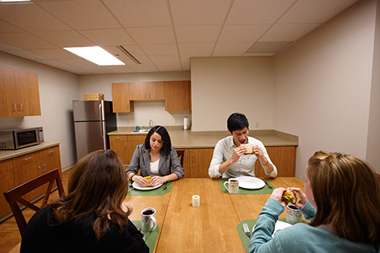
One of the benefits of residential treatment for eating disorders is the structure and support that is built in to every activity, including meal and snack times. Sarah Biskobing, RD, CD, a dietitian at Rogers Memorial Hospital’s Eating Disorder Center, said that these times can be one of the most anxiety provoking parts of a patient’s day. As a result, there is always a treatment team member available to support them as they learn to adapt to normal eating habits.

Read More »

Eating disorders therapy can be more than talk

Some of the most powerful experiences our patients have during their treatment stay are in our art studios, the fitness rooms or on our ropes course.

Experiential therapies are a hallmark of Rogers Memorial Hospital’s residential and inpatient programs. Our patients not only work with master’s prepared clinicians and board-certified physicians, they also work with highly trained experiential therapists who facilitate treatment not just through talk, but also through non-verbal means of expression.

Tina Szada, ATR-BC, an art therapist at Rogers’ residential Eating Disorder Center in Oconomowoc, recently participated in a mannequin art competition that illustrates the power of a non-verbal treatment experience.

Read More »

Eating disorder treatment helped make college experience a reality

At 15 years old, Erika* thought she had found a great way to lose weight over the summer and stay healthy. At first, she received compliments on how she looked and how active she had become. But eventually, her friends knew something wasn’t right.

“They noticed that I was throwing away my lunch. They noticed that I was distracted, isolated, that I walked around during lunch,” said Erika. Her friends tried to drop hints that the way she had been eating and been taking care of herself was, in fact, an eating disorder.

Read More »

Doors Open to New Inpatient; Experiential Facilities

Representatives from Rogers Memorial Hospital, its boards of directors, medical leadership and local officials gathered on March 14 officially open the doors to Rogers’ new inpatient facility and experiential therapy center with a ribbon-cutting ceremony in the new gymnasium. The facilities were built as a result of input from patients and Roger’s dedication to delivering the highest quality of patient-centered care.

The ceremony marked the completion of the first two phases of a patient-centered construction project that started in February 2010 and will be completed later in 2012 with the grand opening of the residential facility for children and adolescents.

Read More »

Recovery from Eating Disorders

Former patient featured as a “Woman of Substance” Denise Folcik, came to Rogers Memorial Hospital for treatment for anorexia, bulimia and obsessive-compulsive disorder.

Denise Folcik is a person who immediately comes across as confident, happy and lighthearted. She is an outspoken advocate for eating disorder treatment, speaking to many community groups and the Wisconsin State Legislature. Recently, Denise was profiled in “Women of Substance,” (link is external) a feature of Eating Disorder Hope’s website.

Nearly seven years ago, Denise came to Rogers Memorial Hospital for treatment for anorexia, bulimia and obsessive-compulsive disorder. Like many of the patients who come to Rogers, she is amazed at the differences in her life before treatment and today. She smiles and says, “I tell people that it says “Rogers” on my birth certificate, because that’s where my life began.”

Read More »

Eating disorders are a guy thing, too.

It is not unusual for a male to have an eating disorder, as a growing body of evidence indicates that men are as concerned about body image as women.

Males make up approximately 10% of anorexia nervosa and bulimia nervosa eating disorder patients. If you include binge eating disorder, as many as one in four of all eating disorder patients are males.

Read More »

Coping skills are crucial for kids and teens with eating disorders at holiday celebrations

By Jessica J. Witt MSN, RN, CPNPEating Disorders and the Holidays: Coping for Children and Teens
Clinical Services Manager – Eating Disorder Services Milwaukee

December 1st has arrived – and it’s difficult to believe that only a week has passed since Thanksgiving, family get-togethers, and, of course, Black Friday shopping! These are all normal and fun things for children and families to look forward to.

However, for people with eating disorders the Thanksgiving holiday is one of the most dreaded. The spread of food, the relatives that have not been seen in a long time, the desserts, the inactivity, and the likelihood that other family members know nothing about one’s eating disorder is terrifying and triggering for people with eating disorders.

Read More »

Kids with eating disorders avoid “treats” of the season

Be alert to children who are afraid to eat, touch, or be around candy.Eating Disorder Treatment

Halloween is the black and orange day that inaugurates the season of food-centered holidays in our nation. Children and teens get dressed up in their favorite costumes and gather as much candy as humanly possible in a two to three hour period. You have seen kids running from door to door and grabbing handfuls of candy, taking it home, and competing with brothers and sisters by counting how many pieces each one gets. This is totally normal and enjoyable…that is for most kids.

Some children and adolescents, however, do not partake in this event on all Hallows’ Eve. Not due to religious reasons or cultural beliefs, but because they are terrified to eat, touch, or even be around candy. Children and adolescents with eating disorders have extreme fear of eating foods high in calories and fat.

Read More »

Teens in eating disorder treatment program face seasonal challenges

With the support of lead dietitian Kari Johnson, a group of teens in treatment for eating disorders recently tried a seasonal treat: caramel apples. For this particular food challenge, a variety of caramel apples were provided for the group’s snack, including some with nuts and chocolate. The group’s objective was to eat a portion of the caramel apples to fulfill their meal plan. This activity caused the group to become apprehensive at first, because many feared the caramel, nuts and chocolate, thinking that those foods would cause them to gain weight.

Read More »