

Your Choice program helps parents identify substance abuse
Wake Up Call, a program by Your Choice-Live, helps parents identify warning signs of possible drug or alcohol use in their children’s bedrooms.
Wake Up Call, a program by Your Choice-Live, helps parents identify warning signs of possible drug or alcohol use in their children’s bedrooms.

As children in your community participate in this year’s trick-or-treat, many will shriek with excitement from the scary costumes, ghoulish décor and other Halloween horrors. The day after, the frightening excitement will melt away and children will return to their usual fall time schedules. But for thousands of children with anxiety in the United States, dealing with real fear every day of the year is reality.

Exposure and response prevention (ERP) treatment for obsessive-compulsive disorder (OCD) isn’t easy, especially when you’re a child or teenager. Every day, your treatment team is asking you to face your worst fears and avoid using your repetitive behaviors or rituals to control your anxiety. Because treatment can be difficult, it’s necessary for parents to be actively involved in their child’s care plan and not participate in symptom accommodation.
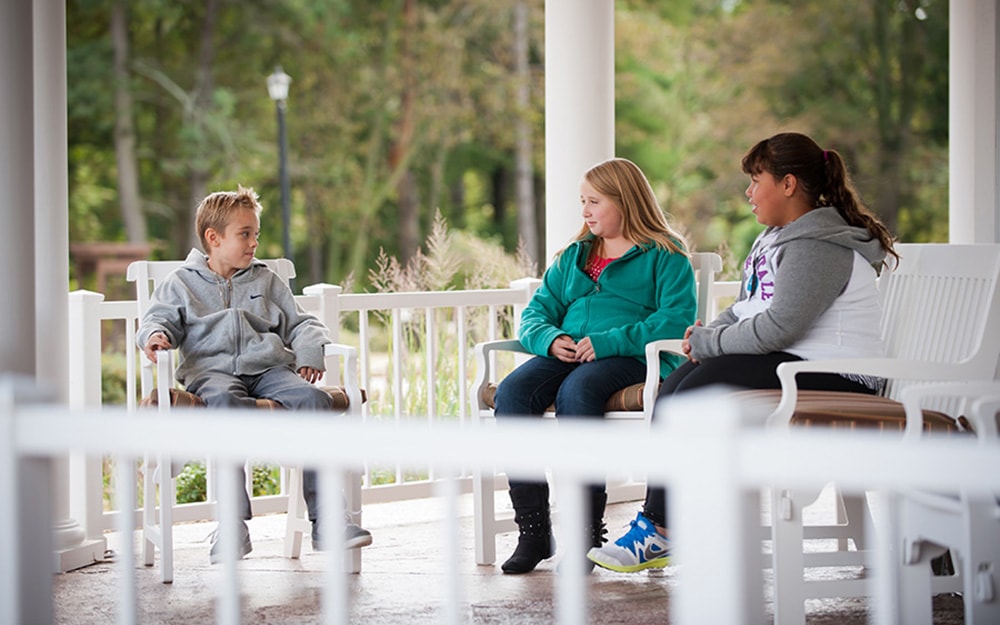
Rogers Behavioral Health’s Tampa, Florida; Nashville, Tennessee; and Skokie, Illinois; locations offer a variety of partial hospital and intensive outpatient programs for children, teens and adults with anorexia nervosa, binge eating disorder and bulimia nervosa. The Rogers’ teams, however, often find their patients also dealing with comorbid conditions related to anxiety.

According to the National Alliance on Mental Illness (link is external) (NAMI), about one-third (link is external) of people with mental illness also experience substance abuse—meaning that they have a “dual diagnosis.” Amy Kuechler, PsyD, attending psychologist for the adolescent dual diagnosis program at Rogers Memorial Hospital–Brown Deer, explains that teens with mental illness—such as depression, attention deficit hyperactivity disorder (ADHD), anxiety or trauma—may be even more susceptible to substance abuse.

Starting in infancy, children mimic their parents’ actions, speech and beliefs, whether good or bad. Studies show that the same goes for parents’ stigma about mental health. Parents’ attitudes toward seeking mental health treatment are a factor in their child’s intentions to pursue psychological help (Vogel, et al., 2009). In other words, if you, as a parent, have a negative view about people with mental health concerns, your child is less likely to speak up about their own mental health. Failing to address a child’s mental health may be extremely harmful and the affects may carry on into adulthood.
Dr. Pahlavan is a licensed clinical psychologist and clinical director of the child and adolescent day treatment and partial hospitalization services at Rogers Memorial Hospital.
Attention Deficit Hyperactivity Disorder (ADHD) is a condition that is often first noticed during the preschool and early school years. One of the most common childhood disorders, ADHD affects 5 to 8 percent of school age children.

Did you know that youth sports can lead to eating and weight problems with certain individual kids or teenagers? Did you know that within some youth sports leagues weight restrictions are put on certain positions within a sport? Many popular sports are known to be “weight sensitive” including ballet, gymnastics, figure skating, wrestling, track/cross-country, and horse-back riding.
The fifth edition of the Diagnostic and Statistical Manual of Mental Disorders, commonly referred to as DSM-5, helps clinicians diagnose mental disorders that aren’t as easily identified by symptoms like many other health conditions, e.g., a broken arm or case of pneumonia. Plus, the new manual offers greater insight into many of these disorders.

Obsessive-compulsive disorder (OCD) is characterized by obsessions or compulsions leading to distress, thereby interfering with overall functioning. Although a diagnosis of OCD only requires the presence of obsessions or compulsions, the majority of children usually experience both. OCD can appear any time between preschool and adulthood, but most commonly surfaces between ages 8 and 12 or between the late teens and adulthood. It is estimated that approximately 1 in 200 children and adolescents has OCD.
