
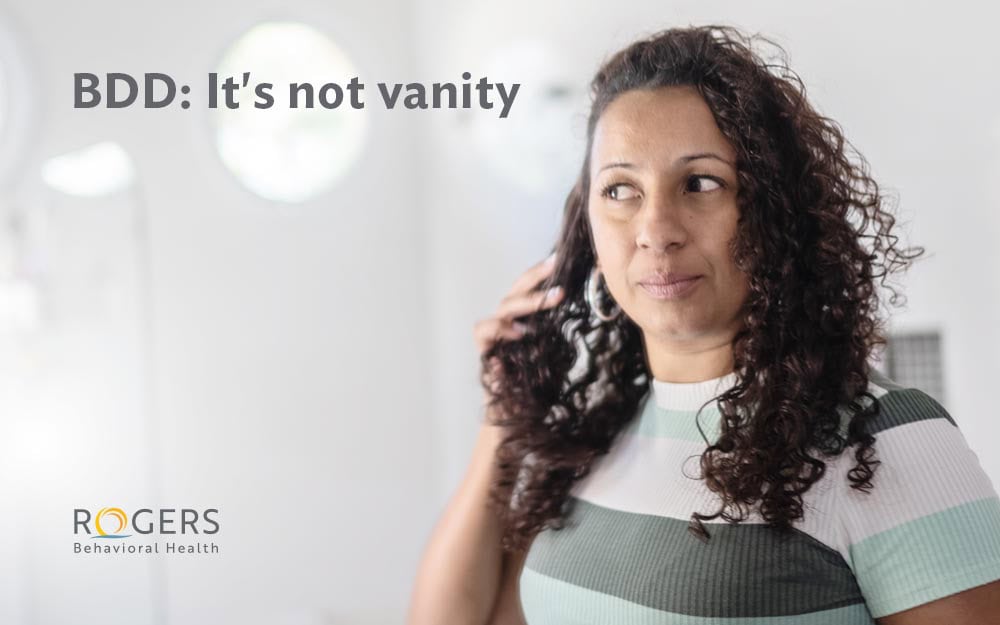
What is Body Dysmorphic Disorder? Is it just being vain?
A person with Body Dysmorphic Disorder (BDD) is intensely preoccupied with perceived flaws or defects in their physical appearance, which may or may not be noticeable to others. They fixate on specific body parts, believing that there’s something wrong with them.
BDD is not about being vain or having ordinary concerns about one’s appearance. While we all have times when we’re not happy with how we look, BDD is a serious mental health challenge. It involves obsessive thoughts about a distorted body image, which cause significant emotional distress.
Are there certain body parts people with BDD fixate on more than others?
Certain body parts that people with BDD tend to focus on include:
- Skin (acne, wrinkles, scars)
- Hair (thinning or balding)
- Nose
- Weight and shape (size of body or specific body parts like the stomach or thighs)
- Muscle size (in men, particularly)
While these are common areas, any body part can be perceived as flawed by someone with BDD. Additionally, a person can have more than one area of concern at a time.
What is the person with BDD feeling?
Someone with BDD often feels intense shame, embarrassment, and anxiety related to their perceived physical imperfections. They often feel isolated, unattractive, and sometimes even “deformed.” These feelings can lead to low self-esteem and may make it difficult for them to engage in daily activities, including socializing or going out in public.
What are common signs of BDD?
BDD can lead to harmful behaviors. Six common BDD symptoms are:
- Excessive checking: Frequently checking mirrors or reflective surfaces to scrutinize perceived flaws. At times, a person may get “stuck” gazing at their appearance in a mirror or picking at their skin.
- Comparing: Constantly comparing oneself to others, sometimes seeking reassurance or validation about appearance.
- Seeking cosmetic procedures: Some people with BDD may undergo frequent and unnecessary surgeries or skin procedures, which don’t lead to lasting changes in their perceptions or self-esteem. Financial and physical burdens can worsen the distress.
- Camouflaging: Using makeup, clothing, or hairstyles to cover perceived flaws.
- Avoiding: People with BDD tend to avoid social situations, photographs, or public places in order to hide their appearance.
- Wanting constant reassurance: The reassurance only has a fleeting effect, and it can lead to arguments. Reassurance can also be subtle, such as analyzing facial expressions when discussing the perceived flaw without directly asking for others’ opinions.
The distress caused by the constant preoccupation with appearance can lead to anxiety, depression, and in extreme cases, contribute to suicidal thoughts and actions.
How does a person develop BDD?
A person can develop BDD for a variety of reasons. Distorted thinking patterns and beliefs about one’s appearance are at the core of BDD. Repeating certain behaviors reinforces those beliefs. For example, a person may obsess over one feature, catastrophize its significance, and not engage socially, when being around others could challenge those negative beliefs.
Potential contributing factors also include:
- Genetic predisposition: There may be a hereditary component, meaning some people may be more prone to developing BDD.
- Environmental influences: Distressing life experiences, such as bullying or ridicule related to appearance.
- Cognitive factors: Negative thinking patterns, such as a tendency to magnify flaws or view body image as a significant source of self-worth play a role.
Who is more likely to develop BDD?
BDD can affect people of any age or gender, but it tends to develop during adolescence or early adulthood. While it’s often thought of as a condition that mostly affects women due to societal pressures about beauty, research shows that BDD is relatively common in both men and women. However, men may be more likely to focus on muscle size, whereas women may be more likely to focus on features such as skin, hair, or weight.
How can a person support someone with BDD?
Supporting someone with BDD can be challenging, but it’s also very important. Loved ones often struggle to understand the fixation on appearance and may think that there is nothing to be concerned about, everyone has flaws, and no one even notices.
Instead of trying to convince someone that nothing is wrong, here are five ways you can provide support:
- Be open to changing your approach: It’s natural to want to help someone you care about, but the truth is that we can’t control what others do. What we can control is how we respond and show up for them. Sometimes, without meaning to, we get stuck in patterns that make things harder for both us and our loved one. The good news is that change often starts with us. By trying something new in how we approach and support our loved one, we open the door to new possibilities not just for them, but for ourselves, too.
- Validate their feelings: While their concerns may seem irrational, their feelings are real and distressing to them. Listen without judgment and avoid arguments over whether their views of their appearance are accurate. Don’t focus on whether their concerns are rational. Instead, search for your loved one’s feelings when they express their concern and reflect that back to them. Consider saying something like, “I can imagine you feel really frustrated that you believe your hair is thinning despite everything you do to protect it,” or “I can hear how much pain it causes you to believe your nose is too big.”
- Avoid reinforcing their behaviors: Try not to participate in excessive reassurance-seeking, such as constantly discussing their appearance. Encourage other ways of connecting. Create and practice a supportive message that you can say when you feel like you’re being pulled into an appearance-related discussion. Consider, “I can tell this is really weighing on you, and I want to help you find ways to feel calmer that don’t focus so much on how you look. Want to try a quick mindfulness exercise with me or maybe take a walk together?”
- Encourage professional help: Gently suggest that they seek help from a mental health professional who is experienced in treating BDD, such as through cognitive behavioral therapy (CBT).
- Educate yourself: Understanding BDD can help you be more empathetic and better equipped to offer support.
How can treatment help with BDD?
Treatment for BDD, specifically CBT, can significantly improve a person’s quality of life.
CBT helps people:
- Challenge distorted thinking: People with BDD can recognize and correct irrational thoughts about their appearance, focusing on how these thoughts negatively affect their mental health.
- Engage in gradual exposure: In exposure-based therapy, a trained clinician helps a person slowly face situations they fear related to their body image. This process can reduce the anxiety associated with obsessive thoughts and provide evidence for a more balanced belief about their appearance. By gradually confronting anxiety-triggering situations without resorting to their usual coping mechanisms, such as mirror checking or avoiding social situations, people learn that they’re able to tolerate discomfort. They may also realize that situations aren’t as bad as they may have predicted.
- Develop healthier body image: People learn more realistic ways to view and accept their bodies.
In some cases, medication may be prescribed to help reduce the severity of symptoms and make therapy more effective.
BDD is treatable, and with the right support and therapy, people can learn to manage their symptoms and improve their overall well-being.
By Dr. Brenda Bailey, PhD, regional clinical director for Rogers Behavioral Health
Rogers offers anxiety treatment
Living with anxiety is challenging and isolating. Reaching out for help takes courage. Our compassionate experts can support you in building a more connected and fulfilling life.
Call 833-308-5887 for a free, confidential screening.
Listen to our Rise Above podcast with Brian Cuban who shares his battles with BDD, addiction and an eating disorder. Brian opens up about his personal journey, sharing the challenges he faced, the pivotal moments that led to change, and the tools he used to rebuild his life.
