
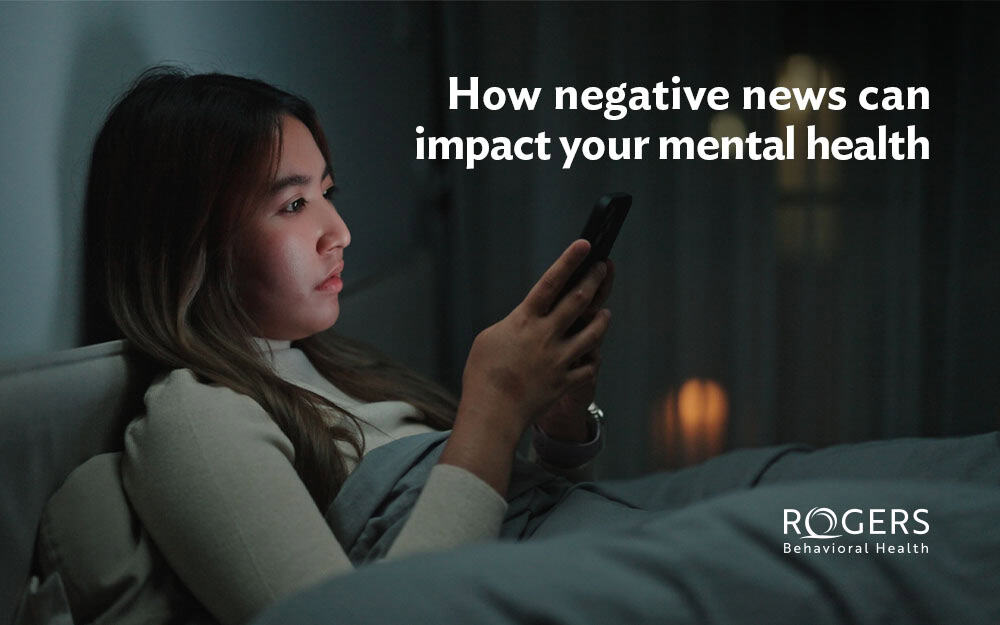
When the news is filled with difficult headlines, it’s natural to feel overwhelmed. Constant exposure to negative news can take a toll on our mental health.
Rogers Behavioral Health’s Dr. Tyler Rickers, DO, psychiatrist at Rogers in Oconomowoc, explains how to tell when the news becomes too much and offers practical ways to protect your mental well-being while staying informed.
What are some common emotional responses to negative news?
Common emotional responses are:
- Sadness
- Anger
- Frustration
- Anxiety
Crying in and of itself is not a sign that you’re depressed. It’s a typical human emotion, but if you find yourself crying too much or over little things, that’s when I would be concerned that the stress from the news is becoming too much.
How can exposure to negative news affect our mental health?
It can put a lot of stress on us, cause us to worry, and make us feel unsafe. Over time, this can lead to pessimism and feelings of helplessness. For some people, certain events may bring back traumatic memories. Additionally, it can spill into our relationships, causing tension or conflicts with family and friends due to differing viewpoints.
What are signs someone is consuming too much news and it’s negatively affecting their mental health?
Basically, it boils down to whether a person is able to function or maintain their daily responsibilities.
Some questions to ask yourself include:
- Am I able to do my job or schoolwork as usual?
- Are my relationships being affected?
- Am I avoiding activities or people?
- Am I lacking motivation?
- Has my appetite or eating changed?
- How am I sleeping?
- Do I feel on edge or tense much of the time?
If you’re lying in bed at night thinking about or replaying what you’ve seen in the news, you’re probably taking in too much. Most of us have a lot of things we need to do every day and worrying about things that are out of our control isn’t good for anyone’s mental health.
How can a person set healthy boundaries with news intake and stay informed?
Some strategies I recommend trying include:
- Limit your news intake: Give yourself 15 minutes a day to review the news headlines or catch up for 10 minutes twice a day. Set a schedule and stick to it.
- Be aware of algorithms: They’re designed to get your clicks and feed you stories that provoke a strong reaction.
- Avoid doomscrolling: If you notice you’re on your phone for long periods of time and feeling anxious or angry, that’s a good sign to step away.
What are ways we can guard our mental health at this time?
There are several things we can do to guard our mental well-being, including:
- Practice self-care
- Exercise
- Try mindfulness
- Get outside
- Be around friends and loved ones without talking about the news
- Focus on what you can control
How should parents talk with their children about upsetting news?
I advise parents to keep it bite-sized, which means brief, and keep it PG. Make sure you’re talking about the news in an age-appropriate way and skip details they don’t need to know. Assure your child that they’re safe and reinforce your families’ values, then get them refocused on reading, writing, and arithmetic.
When should someone consider getting professional mental health support?
It’s a good idea to seek support when stress from the news begins to affect your daily life—things like eating and sleeping habits, or if you’re feeling unhappy or unsettled for an extended period of time. If you’re constantly checking the news every chance you get, you’re probably missing out on some of the other things happening in your life.
Here’s the bottom line: Focus on what you can control. Watch the news in moderation. Too much of anything isn’t good. Step away from the screen, get outside, and notice the clouds and the stars. Stepping away from the news doesn’t erase what’s happening, but it can help you feel more able to cope. You might find that spending time in nature may help you feel calmer and less stressed.
Rogers offers mental health treatment
If you’re feeling overwhelmed and don’t know where to turn, Rogers can help. We’ve been providing hope and healing for more than a century.
Call 833-308-5887 for a free, confidential screening.
Upsetting news can trigger emotions like sadness, anxiety, or frustration and make you feel unsafe or overwhelmed, especially if you’re exposed to it constantly.
Ask yourself if news exposure is affecting your ability to do everyday tasks, sleep, eat, enjoy time with family or friends, or if you’re feeling tense or on edge much of the time.
Try setting limits on how often you check the news, avoid long scrolling sessions, and stick to a few reliable sources instead of constantly refreshing feeds.
If distressing news coverage starts affecting your sleep, eating habits, motivation, or overall mood for an extended period, it may help to talk with a mental health professional.
