
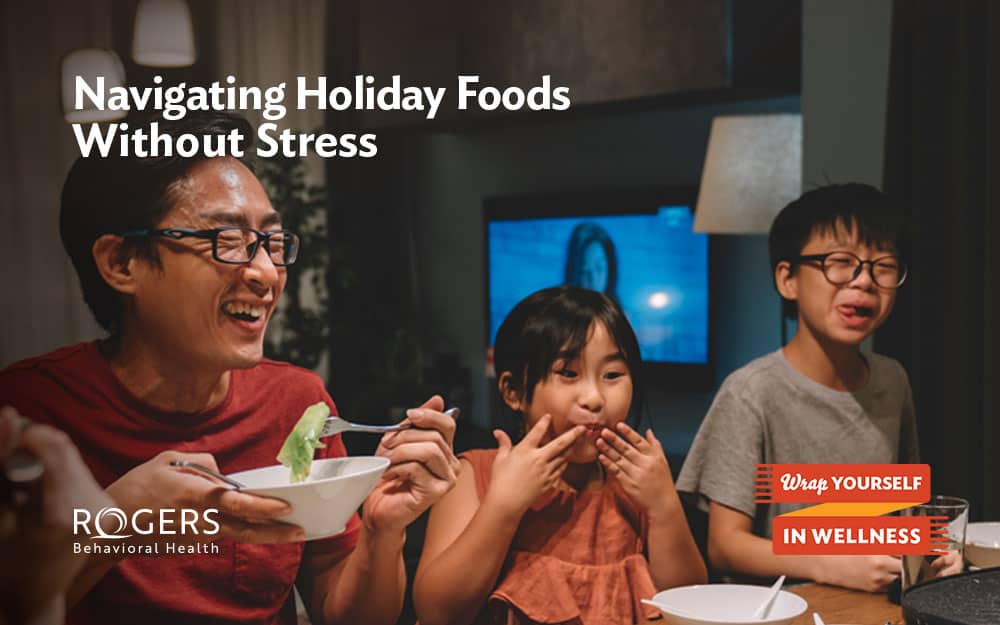
Navigating a wide variety of foods during the holidays can be tricky. Savory food and sweet treats are everywhere. Some people indulge temporarily, then return to their usual eating habits. For others, too many choices create anxiety and feelings of uncertainty.
Rogers Behavioral Health’s Cindy Dexter, RD, CD, registered dietitian specializing in OCD and Anxiety residential care for adults, shares common challenges and recommendations for overcoming them.
What are challenges associated with holiday eating?
More options can make it difficult for people with food allergies to avoid an allergic reaction. People from different cultures may not be familiar with foods served in traditional American holiday settings. Additionally, the holiday table can be scary and triggering for someone with an eating disorder. Anxiety increases the likelihood of coping behaviors, such as food restriction, binge eating, or purging after a meal.
The holidays often come with unrealistic expectations and overstimulation, which set us up for disappointment or feelings of inadequacy when things don’t go perfectly.
Why do the holidays often bring up emotional eating patterns?
The holidays aren’t a happy experience for everyone. People who already feel depressed and anxious tend to feel heightened emotions for several reasons:
Financial stress: People with limited resources may feel pressured to buy gifts they can’t afford.
Pressure to be happy: People might hide their true feelings to avoid bringing everyone else down. Others around them may be emotionally unavailable, focused on enjoying the season.
Family disagreements: Increased stress during family gatherings can leave individual members feeling isolated or unsupported.
Significant life changes: The loss of a job, a relationship, or a loved one can forever change a person’s feelings toward the holidays.
Someone feeling painful emotions can seem like the happiest person in the room. The holiday food table can be a source of indulgence to numb or cope with negativity. On the flip side, someone who doesn’t trust themselves around large amounts of food may restrict their intake and isolate themselves by skipping holiday parties altogether. Engaging in self-care through proper nourishment is critical.
What does balanced eating mean?
Balanced eating means:
- No foods are off limits or categorized as unhealthy
- Nutritional needs are met by paying attention to hunger and fullness cues or eating on a consistent schedule
- Everyone is included: all people, regardless of size, are worthy of meals that include a wide variety of different foods that leave them feeling full and satisfied
What does balanced eating look like during the holidays?
People who find it challenging can still manage balanced eating during the holidays by following a few recommendations:
- Don’t skip meals. Diet culture says eating less earlier helps us avoid excess calories later. It’s like punishing yourself for a crime you’re about to commit. Skipping meals only makes you feel hungrier, which can lead to eating too much too quickly.
- Choose satisfying portions: Leave the table feeling comfortably full.
- Avoid the all-or-nothing approach: Include a variety of foods to get enough calories, vitamins, and minerals.
- Stay hydrated: Drinking plenty of water supports proper digestion, cognitive and biological functions, and energy needs.
- Enjoy a sweet treat: Treats are part of the holiday experience. Enjoy them simply because they taste good.
- Minimize alcohol intake. Alcohol impairs judgment and the ability to control behavior, which may also impact mindful eating.
Balanced eating is a crucial form of self-care.  A well-nourished body performs better under stress when it functions well metabolically. Balanced meals fuel the body with energy and support a healthy immune system, giving it the strength to manage tough situations physically and emotionally.
The differences between a well-nourished body and a starved body are evident. The famous Minnesota experiment conducted in 1944 provided a wealth of knowledge about the physical and psychological effects of starvation. The study proved that a state of starvation puts the body in a vulnerable position. A person who is not well nourished will have a harder time managing the stress of the holidays.
What if I ate beyond my usual intake?
If I ate more than I normally do:
- Accept and acknowledge that occasional overindulgence is a normal part of life in order to move forward with less judgment.
- Practice mindfulness by staying in the present moment at each meal. Focus less on what you ate before and what you will eat later.
- Be kind and forgiving. Have patience and compassion for yourself as you move back into your usual routine.
How do I get back to my regular eating after the holidays?
Take a gentle approach toward your routine after the holidays by:
- Making sure you eat a balanced meal every three to five hours. Avoid dieting to lose weight.
- Engaging in exercise by starting where you are with physical fitness. If you’re new to exercising, start by taking walks before or after work, or during your lunch hour. Select a physical activity you will enjoy. Avoid the pressure of an expensive gym membership if it doesn’t fit into your lifestyle.
- Getting enough sleep every night. Going to bed and waking up around the same time every day helps support a regular eating schedule.
- Setting realistic goals for the new year. Goals should be SMART: Specific, Measurable, Achievable, Relevant, and Time-bound to build a sense of accomplishment. A good example is, “I will take a walk three days a week for 15 minutes before work for the next month.”
The diet and exercise industry hits hard every New Year by criticizing weight gain and celebrating weight loss. We’re told we can control our body size and shape, no matter what our situation, which escalates feelings of guilt and shame. These messages encourage people to look down on themselves by making them believe they need to fix their weight after the holidays.
Reduce time on social media and television. Instead of listening to all the chatter telling you what you should do, arm yourself with proper nourishment, hydration, and gentle movement. You’ll feel more confident that your choices are the ones that work for you, so you can start the New Year with your head held high.
Rogers offers mental health treatment
We provide compassionate care that works for children, adolescents, and adults.
Call 833-508-3887 for a free, confidential screening.
Wrap Yourself in Wellness
For more expert tips of how to care for your mental well-being this winter, click here.
