
The winter months can take a toll on our mental health. From fewer hours of sunlight to the hustle of the holiday season, it’s not uncommon to feel tired, overwhelmed, and emotionally drained.
Rogers Behavioral Health’s Dr. Heather Jones, PhD, chief clinical officer kicks off our Wrap Yourself in Wellness series sharing strategies for staying on top of your mental well-being.
How can the winter months impact our mental health?
Shorter days with less daylight can throw off our body’s natural ‘clock,’ which affects our mood and sleep. If you notice your mental health is harder to manage during the winter months, you’re not alone.
Seasonal affective disorder (SAD) is a form of depression which affects an estimated 5% of Americans. Women are about four times more likely than men to experience it. Symptoms typically begin in late fall or winter and resolve in spring or summer. SAD symptoms include:
- Depressed mood
- Low energy
- Oversleeping
- Social withdrawal
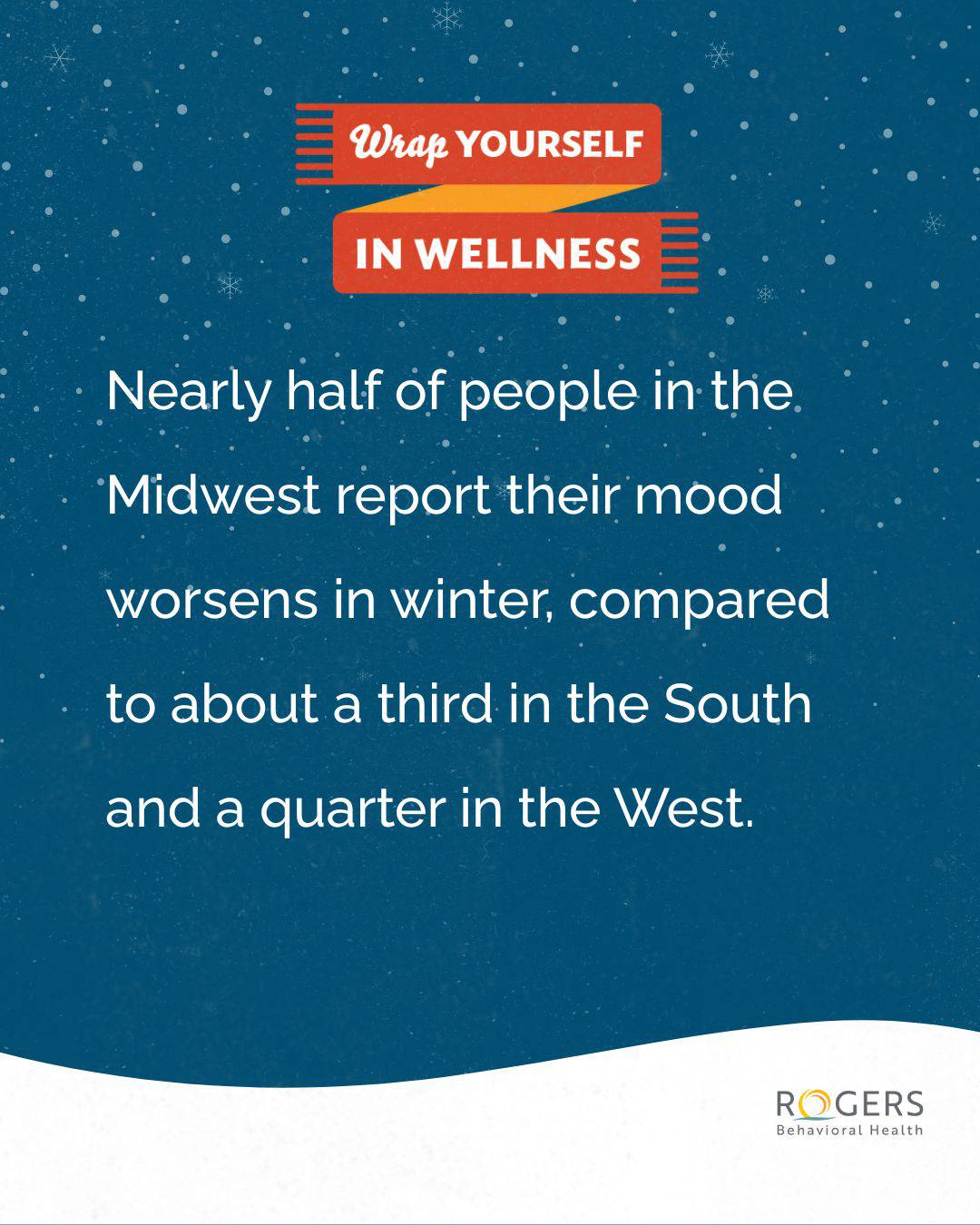
Additionally, in a poll by the American Psychological Association, 49% of people living in the Midwest were more likely to say their mood worsened in the winter months compared to 35% in the South and 26% in the West.
Though less serious, people can also struggle with what’s known as cabin fever, which refers to feelings of irritability, restlessness, and mood shifts due to feeling confined or isolated indoors over extended periods of time.
What is winter-related fatigue?
In winter, shorter days, limited time outdoors, reduced exercise, and the stress of holiday plans and responsibilities can all lead to fatigue.
Symptoms of fatigue include:
- Persistent tiredness, even after adequate sleep
- Disruption of sleep patterns: later sleep, shorter sleep, sleep that feels less restorative
- Feeling “slowed down”
- Heaviness in limbs
- Low motivation
- Difficulty concentrating
How do the holidays impact mental health?
Gathering with friends and family and maintaining traditions can bring joy, but they also disrupt our routines, which can negatively affect our mood. Combine that with changes in foods we’re eating and emotional factors, such as family dynamics, expectations, and experiencing loss or grief, and it’s easy to see why people can feel stressed or sad.
Here are a few tips for managing routine around the holidays:
- Set realistic expectations: Decide ahead of time what matters, what you will commit to, and what’s optional.
- Maintain some structure: Keep regular sleep and wake times, mealtimes, etc., even if somewhat loosened
- Prioritize self-care: Schedule rest, downtime, and physical activity. Set boundaries and say “no” when needed.
- Stay connected socially: This can include connecting virtually or attending small gatherings. Loneliness tends to spike in winter, and holiday expectations can make it worse.
What are strategies to boost mental wellness during winter?
I have six recommendations for boosting mood during the winter months.
1. Light therapy / increasing light exposure
Using a light box, getting sunlight through windows, or taking daytime walks can support your body’s natural rhythms and help improve mood and sleep.
2. Regular physical activity
If you can’t get outside to exercise, find a way to do it indoors. Exercise helps with energy, sleep, and mood.
3. Nature exposure
Even a five-minute outdoor winter activity has measurable benefits for our mood.
4. Sleep hygiene
Try to keep a consistent bedtime and waketime, limit light exposure from screens before bed, and ensure your sleep environment is comfortable. Also, recognize when oversleeping or sleeping too late is causing you to feel more fatigue.
5. Nutrition and vitamin support
Maintain a balanced diet with sufficient protein, limiting sugar. Include foods high in vitamin D if possible or consider supplements after consulting with your doctor. Also, don’t forget to stay hydrated. People often drink less water in cold weather.
6. Mindfulness, stress reduction, mental health support
Practice mindfulness, breathing, meditation, or try journaling gratitude.
When should someone seek professional help?
Someone should seek professional support if they experience:
- Changes in mood that last beyond the winter months
- Difficulty completing regular tasks, work, or family duties
- Suicidal thoughts or feelings of severe hopelessness
- Fatigue that isn’t improved by rest or sleep, or that worsens with otherwise minor changes
Tune into this episode of our Rise Above podcast to learn more from Dr. Jones.
Rogers provides mental health treatment
If you or a loved one is struggling with mental health, it’s okay to ask for help. No one needs to suffer in silence.
Call 833-308-5667 for a free, confidential screening.
Wrap Yourself in Wellness
For more expert tips of how to care for your mental well-being this winter, click here.
