
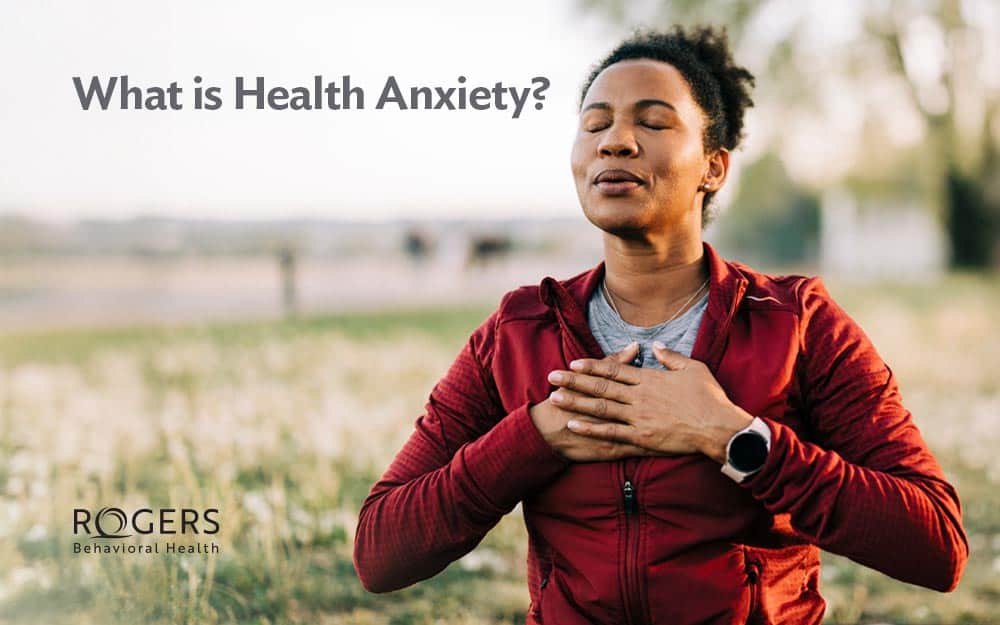
What is health anxiety?
While it’s natural for a person to be concerned about their health from time to time, when occasional worry turns into ongoing and overwhelming fear, it could be a mental health challenge known as health anxiety.
Health anxiety is a preoccupation with having or getting a serious illness. It falls into two categories:
- Somatic: Distress stems from physical symptoms, like headaches
- Illness-focused: Fear is centered on developing a major medical condition or life-threatening disease, like cancer
While it’s estimated 4 to 5% of people in the U.S. are diagnosed with the condition, health anxiety often goes undiagnosed and could affect as much as 10% of the population.
What are common symptoms of health anxiety?
Ten common signs of health anxiety include:
- Increased sensitivity to bodily sensations
- Excessive focus on physical symptoms, often leading to catastrophic thinking
- Reliance on “Dr. Google” or WebMD to research and self-diagnose
- Seeking reassurance through other people’s experiences on non-medical websites like Reddit
- Frequent doctor visits for various symptoms or going from doctor to doctor for the same reason
- Rigid adherence to health routines
- Inability to stop thinking about symptoms due to rumination
- Avoidance of activities previously enjoyed, or an inability to work or take care of oneself due to heightened fear, which is taking up a lot of time, energy, and emotion
- Difficulty accepting medical reassurance, despite thorough evaluations and negative test results
- Dismissal of loved ones’ concerns regarding health fears
As an example, someone with health anxiety might become hyper-focused on a tight sensation in their chest and a racing heartbeat. This leads to fear of having a heart attack. What they don’t realize is the more they hyper fixate on their symptoms, the more their anxiety response may trigger the release of stress hormones, which intensifies the very symptoms they fear.
Another example is someone who, after researching, learns colon cancer is increasingly common for people their age. They become highly anxious about developing it, which leads to an intense fixation on ways to prevent it, to the point where missing a single fiber supplement causes significant stress and convinces them they’re at high risk.
What are more productive ways for how to deal with health anxiety?
When someone has a health concern, it’s always important to talk with their doctor. If there aren’t concerns after a conversation and tests, think about other ways you can support your well-being.
Here are five ideas on how to calm health anxiety:
- Practice mindfulness
- Exercise
- Try meditation
- Engage with people you love and in activities that you enjoy
- Do something based on your values, like creating a card for a family member
How does health anxiety treatment help?
At Rogers, we help patients gain coping skills while facing their fears and increasing their tolerance of discomfort.
For a person who fears developing colon cancer, we might have them read articles or watch videos of people who have experienced it. While it might feel uncomfortable, our goal is to gradually help people build tolerance, allowing them to manage their fear without it overwhelming their thoughts and impacting their ability to function or show up in their lives the way they want.
How can I support someone with health anxiety?
There are several ways someone can support a loved one with health anxiety.
- Validate a person’s emotions
I think one of the most important ways to offer support is to validate a person’s emotions. Many people consider validation as acceptance or even agreement, but it’s not. Validation is recognizing the emotion. Say something like, “Gosh, I felt scared before and I can understand how you feel scared right now.”
- Insert uncertainty
If a person is continually asking for reassurance saying, “Do you think I have x?”, consider showing empathy while allowing for uncertainty. A response could be, “Maybe, and maybe not. I’m not a doctor, so honestly, I can’t be sure.”
- Redirect and don’t give in to reassurance
Typically, a person’s anxiety is going to drive them to return to you over and over again. Try saying something like, “I’m going to answer your question once, then I’m not going to answer it again.” If they return five minutes later asking, “Are you sure I don’t have x?”, you can consider saying something like, “You know what? I already answered this. I know this is really challenging and I’m not going to answer it again. What’s something else we can do together?”
By Annabelle Gainey, LMHC, therapist at Rogers Behavioral Health in Seattle
Rogers offers anxiety treatment
Anxiety doesn’t have to control you. Our compassionate teams can help you manage your symptoms so you can get back to the life you enjoy.
We have several levels of anxiety treatment for children, adolescents, and adults. To get started, call 833-308-5887 for a free, confidential screening.
