
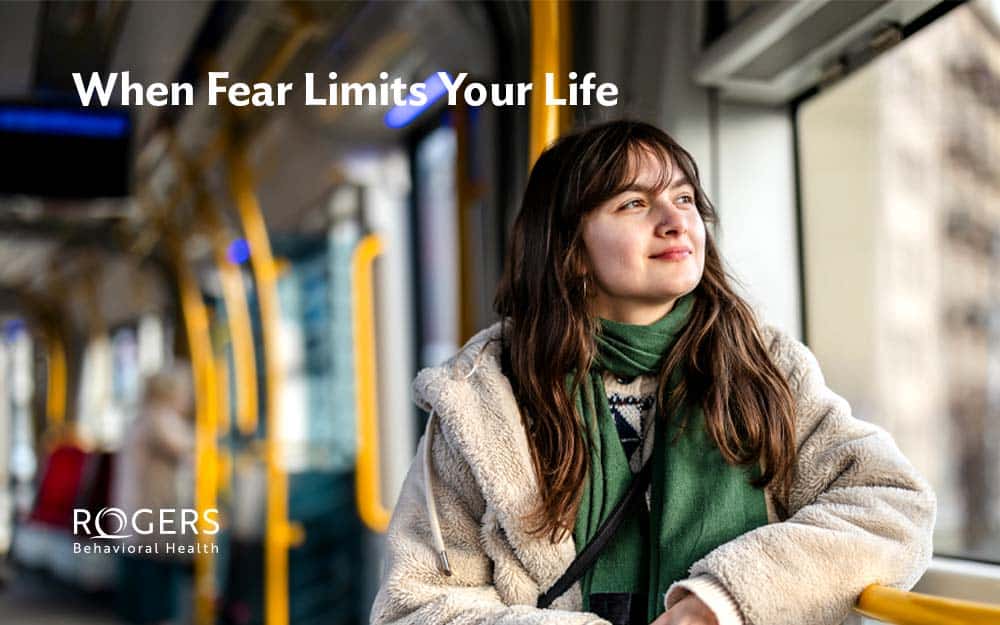
For people with agoraphobia, situations that once felt routine can become increasingly difficult. Fear of having a panic attack or being unable to escape can lead to avoiding places, activities, and even leaving home.
Rogers Behavioral Health’s Jackie Solum, behavior specialist at Rogers in Kenosha, shares what to know about agoraphobia, including its symptoms, impact, treatment, and recovery.
What is agoraphobia?
Agoraphobia is an anxiety disorder that often develops alongside panic attacks. Someone may have recurrent panic attacks that seem to come out of nowhere. They may become increasingly afraid of having another one, especially in public or somewhere they feel like they wouldn’t be able to easily leave or get help.
Over time, the fear of having another panic attack can become almost as distressing as the panic attacks themselves. As a result, someone might start avoiding situations such as:
- Crowded stores
- Driving
- Public transportation
- Being far from home
- Going places alone
What are the signs and symptoms of agoraphobia?
Agoraphobia can look different for everyone. Someone might have a lot of anxiety leading up to situations they’re afraid of or fear about what could happen if they become anxious or panic while they’re there. They might fear:
- Losing control
- Not being able to leave
- Not having someone there to help
- Other people noticing that they’re anxious or panicking
As more situations become associated with that fear, a person’s world can gradually become smaller and smaller.
Physical symptoms
A person with agoraphobia can also experience physical symptoms, such as:
- Racing heart
- Sweating
- Shaking
- Dizziness
- Nausea
- Shortness of breath
- Lightheadedness
Sometimes, even worrying about having these symptoms in public is enough for someone to start avoiding certain situations.
How does agoraphobia impact a person’s daily life?
Agoraphobia can have a pretty big impact on someone’s life, especially as they start avoiding more and more things. They may stop going into certain stores, going to work or school, seeing friends, going to appointments, or doing things they used to enjoy. For some people, it can eventually become difficult to leave home at all.
It can affect relationships, too. Someone with agoraphobia might start relying on a partner, friend, or family member to go places with them or do things for them that feel too overwhelming to do alone. Avoiding something usually makes the anxiety feel better in the moment, which is why it’s so easy to keep doing it. Unfortunately, that avoidance can make the fear even stronger over time.
How can mental health treatment help someone with agoraphobia?
Mental health treatment can help people with agoraphobia start doing the things that anxiety has slowly taken away from them. Using exposure and response prevention therapy, a trained clinician supports someone as they gradually practice facing the situations they fear.
The goal isn’t necessarily to never feel anxious again because anxiety can be helpful in certain situations. It can alert us when something might be wrong or dangerous and help us respond to it. The problem is when that anxiety response starts happening in situations that aren’t dangerous. Anxiety is uncomfortable, but feeling anxious doesn’t necessarily mean that something is unsafe.
Treatment can help someone learn that they can handle anxiety without immediately escaping or avoiding the situation. With practice, things that once felt completely impossible can start to feel much more manageable.
How can loved ones support someone struggling with agoraphobia?
Being patient, listening, and trying to understand what the person is experiencing can go a long way in supporting a person struggling with agoraphobia. At the same time, there can be a fine line between supporting someone and accidentally helping them avoid the things they fear. It makes sense to want to make things easier for someone you care about, especially when you can see that they’re anxious. However, constantly doing things for them, or helping them avoid uncomfortable situations, can actually make the anxiety harder to overcome. Loved ones can support progress, encourage treatment, celebrate the small wins, and ask how they can help.
What would you say to someone wondering whether recovery is possible?
Yes, recovery is possible. It probably won’t happen overnight, and progress doesn’t always mean that anxiety symptoms completely go away. Sometimes progress is being really anxious and doing the thing anyway. My go-to “slogan” is “The more you do it, the easier it gets,” which relates to both engaging in activities when someone is depressed and challenging anxiety. Something that feels impossible right now doesn’t have to feel impossible forever. With treatment, practice, and time, people can learn how to handle the symptoms differently and start getting back to the things that are important to them.
Rogers offers anxiety treatment
We understand that anxiety can feel overwhelming. Managing it isn’t easy, but with the right treatment, you can learn skills to manage anxiety and get back to the things that matter to you.
For a free and confidential screening, call 833-308-5887.
Agoraphobia is an anxiety disorder that can involve intense fear of situations where a person worries they may have a panic attack, be unable to escape, or be unable to get help.
Agoraphobia symptoms can include intense anxiety about certain situations, fear of having a panic attack, fear of losing control or being unable to leave, and physical symptoms such as a racing heart, sweating, shaking, dizziness, nausea, and shortness of breath.
People with agoraphobia may avoid crowded stores, driving, public transportation, being far from home, going places alone, or other situations where they worry they may not be able to leave or get help.
Agoraphobia can lead people to avoid work, school, appointments, social activities, travel, and other things they enjoy. In some cases, fear and avoidance can make it difficult to leave home.
Agoraphobia can be treated with exposure-based approaches such as exposure and response prevention (ERP) therapy. Treatment helps people gradually face feared situations and learn to manage anxiety without relying on avoidance.
