
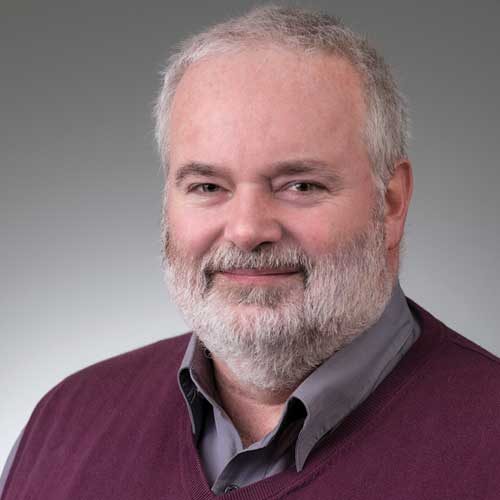
Martin E. Franklin, PhD, is the principal research psychologist at Rogers Behavioral Health, overseeing many of our treatment research efforts at Rogers Research Center. Dr. Franklin also serves as chief psychologist of Rogers’ internship program, helping train the next generation of mental health professionals. Previously, he served as Rogers’ executive clinical director of OCD and Anxiety Services.
Dr. Franklin is an internationally renowned expert in obsessive-compulsive spectrum disorders, including obsessive-compulsive disorder (OCD) and body-focused repetitive behaviors such as trichotillomania, as well as the study and treatment of anxiety and related conditions. He has authored more than 280 research and clinical publications over the course of his career, helping shape how these conditions are understood and treated by mental health professionals around the world.
Additionally, Dr. Franklin is associate professor emeritus of clinical psychology at the University of Pennsylvania School of Medicine. He has received multiple awards for excellence in teaching and has lectured nationally and internationally on OCD and related topics.
Among his many scholarly contributions, Dr. Franklin co-authored research published in in the prestigious journal Nature: Neuroscience identifying genetic links between OCD and chronic tic disorders (CTDs) (Wang et al., 2026). He also one of the lead editors and also an author on an Oxford University Press book focused on the treatment and prevention of adolescent mental health disorders (Evans, 2025). Additional work includes serving as lead author on a study demonstrating the effectiveness of telehealth for pediatric OCD (Franklin et al., 2024), a review of clinical challenges and potential solutions in pediatric OCD treatment (Franklin & Schwartz, 2024), and a review recommending treatment strategies for Pediatric Autoimmune Neuropsychiatric Disorders Associated with Strep (PANDAS) and Pediatric Autoimmune Neuropsychiatric Syndrome (PANS), conditions believed to be associated with OCD (Franklin et al., 2023).
