
Guiding the way: Rogers booklets offer support for navigating mental health
While navigating mental health challenges often involves a whirlwind of emotions and challenges, knowledge can be grounding.
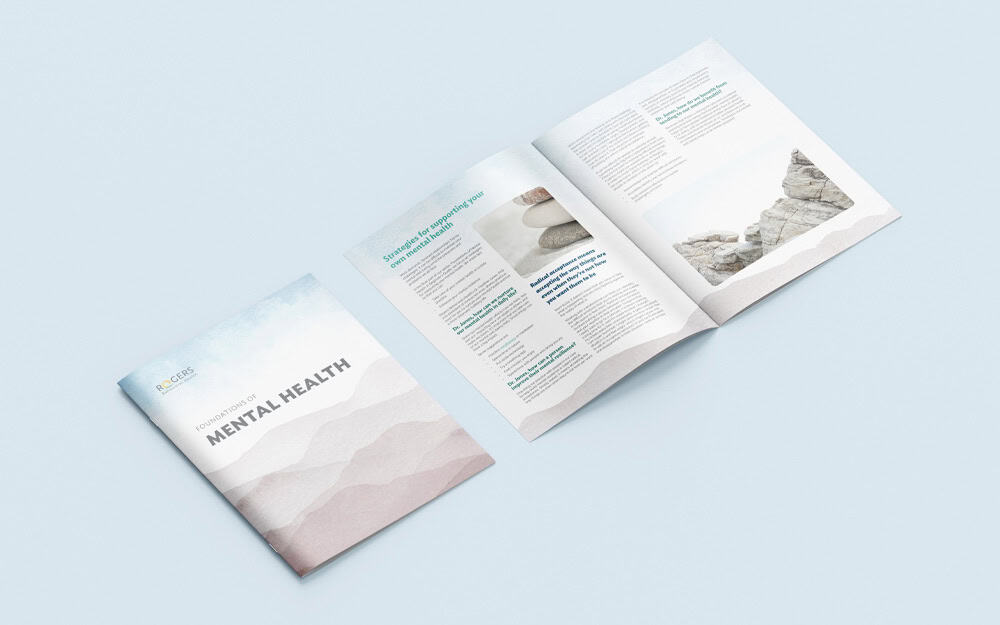
To empower people to better understand and address mental health, Rogers’ Marketing and Communications team has crafted two magazine-style guides that offer foundational information about mental health and family well-being.
“The mental health care landscape can be very confusing,” says Deb Brown, senior digital marketing communication specialist. “It can be emotionally and financially draining.”
Deb partnered with several Rogers experts to write various blogs as part of two series that resulted in the guides. The first, Foundations of Mental Health, is a beginner’s guide that helps readers better understand mental health, recognize when to seek help, and support themselves and others with strength and clarity. The second, Family Foundations, is a guide to building a stronger, healthier home, with practical tools and insights to support family well-being.
“Our focus in marketing is to communicate with people along the entire spectrum of mental health knowledge and experiences, from those who can benefit from basic tips to those who are in dire need of help,” Deb says. “The blogs help accomplish that, and putting them in booklet form felt like a natural next step. We had all these great insights from our clinicians, so the goal was making that content more available to people.”
The two blog series in booklet form are available for download on Rogers’ website. The guides will also soon be available in physical form at Rogers locations in Oconomowoc.
Deidre Rubie, Marketing graphic design specialist, put thought and care into designing the booklets, using watercolor and nature imagery such as waves to represent the overwhelming, disorienting feelings mental health challenges can bring, as well as mountains and rocks to show sturdiness and resilience that can come with a foundation of understanding.
“People are bombarded with content all the time, so I like to think about how we can use design to really show readers these guides are special,” Deidre says. “Good design can help us stand out and encourage readers to spend time engaging with the material.”
“To see the words and conversations come alive with the beautiful colors and imagery is more than I could have asked for,” Deb says. “These guides are meant to provide hope and insight, reduce mental health stigma, and let people know they’re not alone.”
