
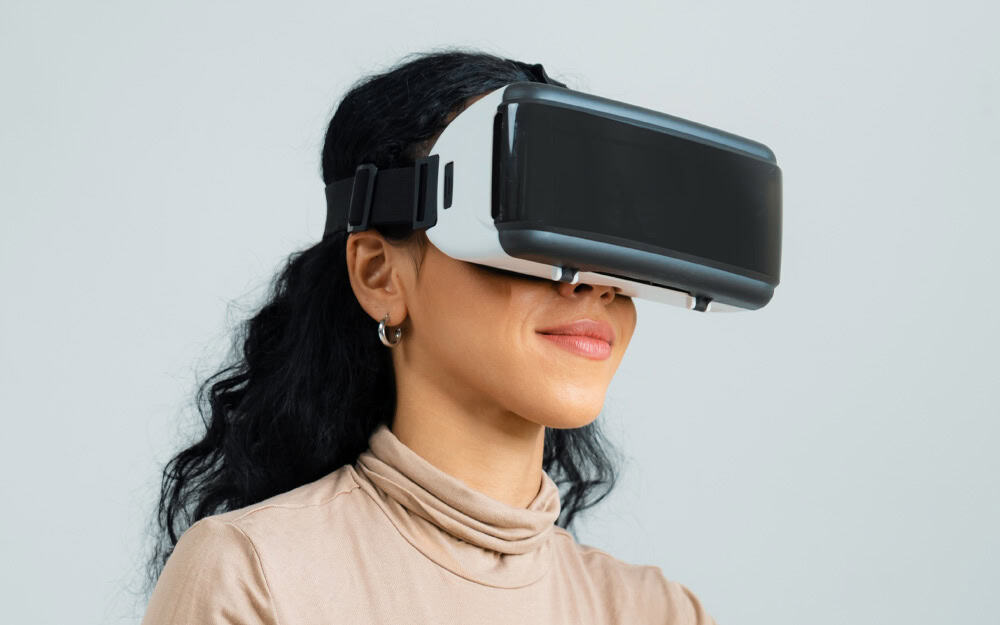
Virtual reality offers nearly limitless possibilities, opening the door to new worlds– including, perhaps, a new place in treatment innovation.
Virtual reality can have major real-world value, as evidenced by innovations in the behavioral health field such as ways to promote mindfulness and overcome fears.
Starting soon in the Nashotah Center for DBT, Rogers will offer female adolescent residential patients VR experiences with Meta Quest™ headsets designed to promote feelings such as calm and focus and enhance cognitive and emotional well-being. As part of a study, researchers will evaluate if the Liminal VR™ experiences have an impact on how patients experience mindfulness and whether they increase time spent on mindfulness activities.
The Liminal VR™ experiences are research-backed, and the team informing their development includes neuroscientists and psychologists.
Already, mindfulness is a core part of Dialectical Behavior Therapy (DBT), and Nashotah patients are encouraged to engage in up to an hour of mindfulness each day to help with areas including emotional regulation, self-acceptance, and focus. However, patients may struggle finding mindful activities that work for them, allowing them to fully focus on the experience without distraction.
Because VR mindfulness is so immersive, it may better engage patients, says Kelly Piacsek, PhD, executive vice president of Research, allowing them to settle into the experience. So far, patients who tested the VR experiences during the development of the study gave extremely positive feedback.
Additionally, Rogers is piloting VR for exposure therapy, opening up more possibilities for patients. As part of a pilot in Silver Lake North within the IOP/PHP Child and Adolescent OCD clinic, Rogers is collaborating with oVRcome™, a company that provides us access to more than 1,000 full 360-degree exposure simulations, from scenarios in grocery stores to airplanes.
The oVRcome™ platform allows clinicians two methods in deploying the exposure practice. A live session allows a clinician to work alongside a patient during the exposure practice, viewing the same content the patient sees through the Meta Quest™ headset on a web browser. The second option is independent practice for patients in-clinic.
“Integrating virtual reality into our care model represents a powerful step forward in treatment innovation,” says Heather Jones, PhD, vice president of Clinical Services. “VR allows us to create immersive, controlled environments where patients can safely face and navigate their fears, build skills, and engage in exposure work in ways that were previously impossible. This technology not only enhances the effectiveness of evidence-based interventions like CBT and ERP, but it also helps us meet patients where they are—bringing therapy into the modern world with tools that are engaging, accessible, and profoundly impactful.”
Dr. Piacsek says VR exposures can be beneficial in bringing a wide variety of real-world experiences to the patient while managing the intensity of exposures as they progress through treatment.
“Some exposures can be difficult to replicate, such as the process of going through an airport and boarding a plane, driving, or handling severe weather, but with VR, the clinicians can work side by side with the patients to identify and practice building resilience in real situations at the pace that is right for them,” Dr. Piacsek says. “The platform we are evaluating has more than 1,000 VR exposures for us to pick from and adds new material regularly.”
As part of the pilot, she says Rogers will work with oVRcome’s™ production team to create content in areas where there may be gaps or opportunities based upon Rogers’ patient populations and individuals’ needs.
“The potential to incorporate innovative technology through a global collaboration to provide personalized treatment for our patients is really exciting!” Dr. Piacsek says.
